- 中文版:
- EI 100%收录
- 英文版
- SCI 100%收录


中国出版政府奖提名奖
中国百强科技报刊
湖北出版政府奖
中国高校百佳科技期刊
中国最美期刊
中国出版政府奖提名奖
中国百强科技报刊
湖北出版政府奖
中国高校百佳科技期刊
中国最美期刊
| Citation: | Chen Qiyu, Pan Zhongcheng, Fang Hongfeng, Chen Dajie, Liu Gang, 2026. Stratified Autoregressive Generation Framework for Reservoir Characterization: Bridging Multiple-Point Geostatistics and Transformer. Earth Science, 51(3): 1129-1143. doi: 10.3799/dqkx.2026.020

|
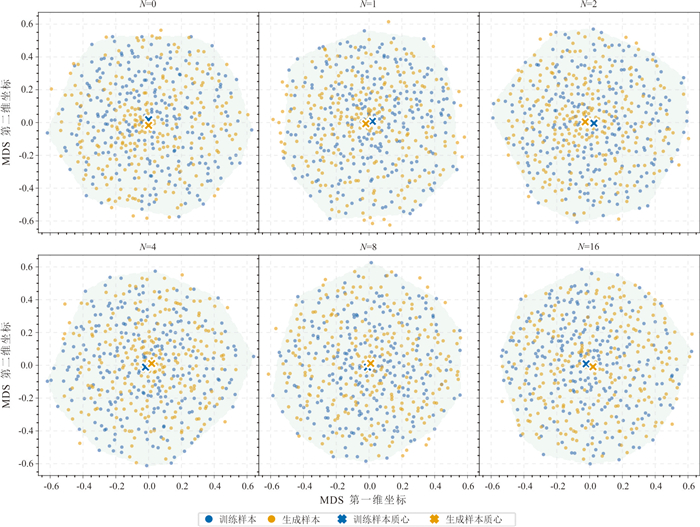
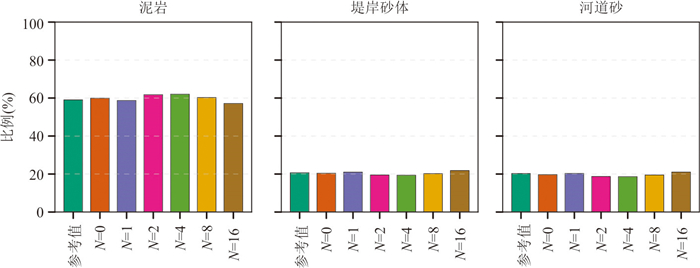
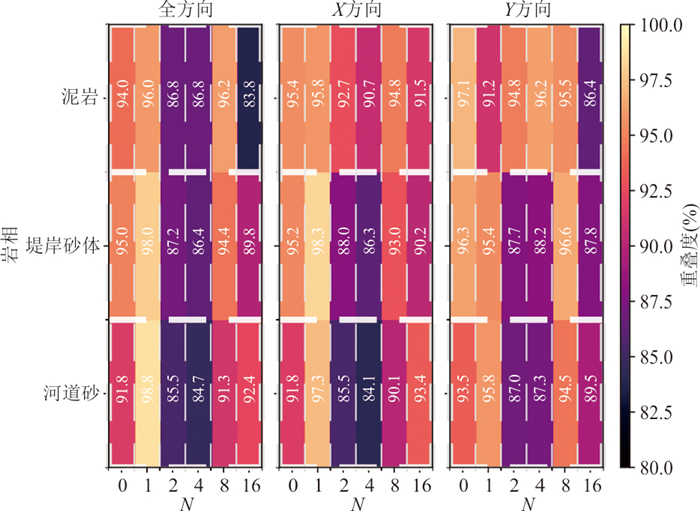
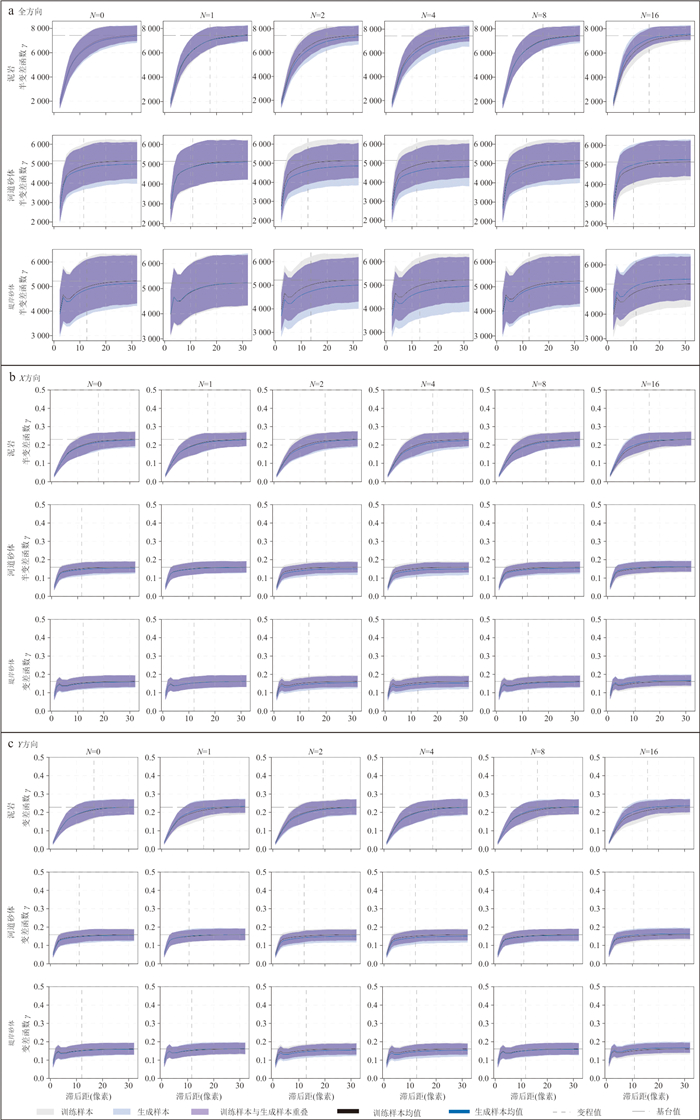
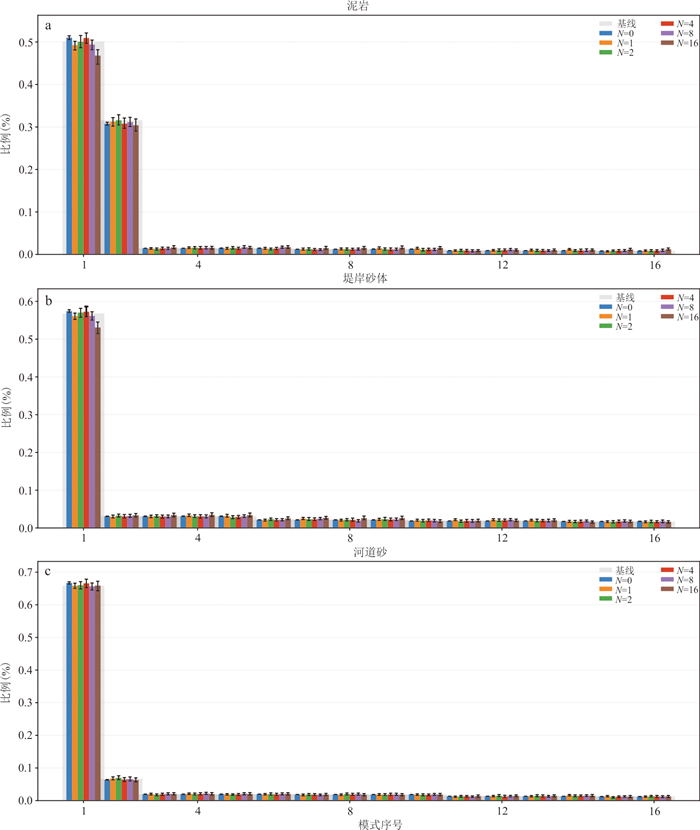
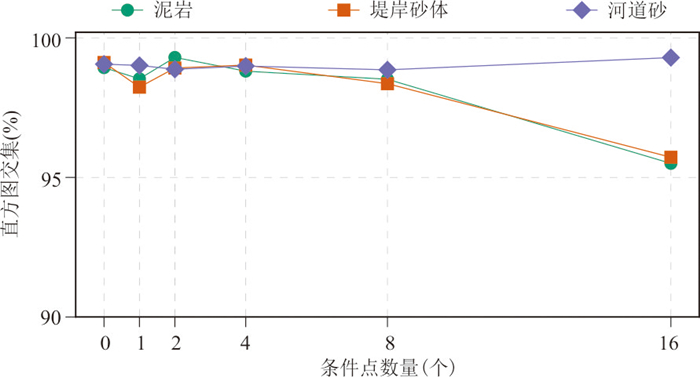
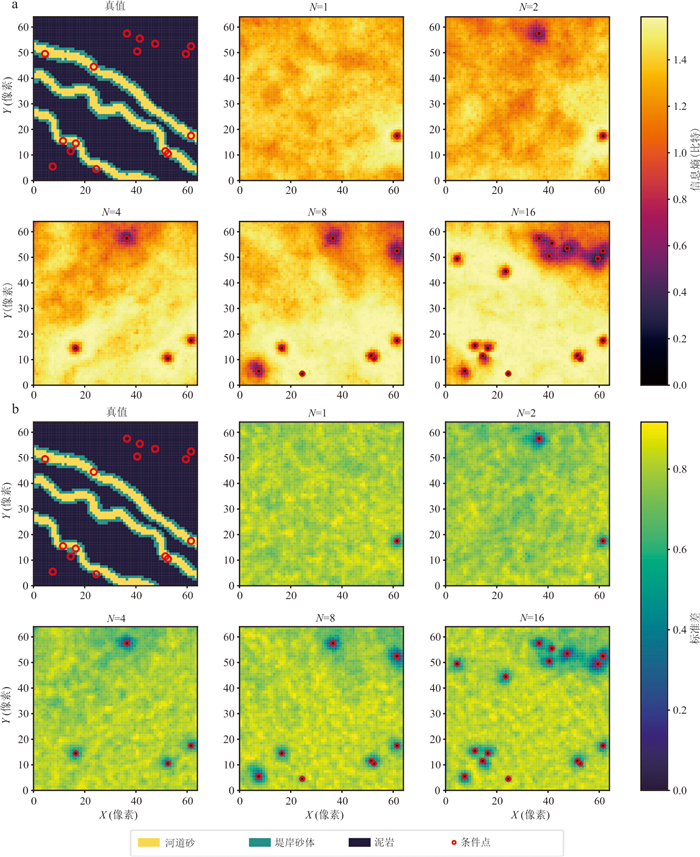
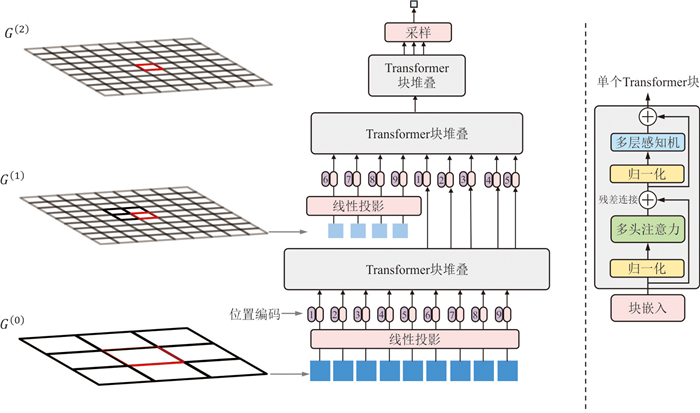
To address the mode collapse and artifacts encountered in deep generative models under hard data constraints, this study proposes a Stratified Autoregressive Generation (SAG) method, aiming to develop a robust reservoir characterization approach. The method utilizes an offline-trained Transformer architecture as a conditional distribution estimator to replace the computationally expensive online "search and count" process of MPS. A three-level, coarse-to-fine strategy is adopted to define global structures at large scales first and subsequently propagates constraints to finer scales, thereby avoiding the quadratic computational complexity on large grids. Multiple sets of experiments as well as multidimensional scaling and variogram analyses indicate that the generated realizations possess diversity and accurately reproduce the global statistics and spatial continuity of the training data. Quantitative assessment using histogram intersection further confirms high local pattern fidelity without artifacts. Uncertainty assessment reveals that uncertainty increases outward from hard data points, showing a convergence pattern consistent with geological laws. The results indicate that the proposed method maintains spatial continuity and realization diversity under varying amounts of hard data constraints, which achieves the accurate characterization of complex reservoir structures and properties.

|
Al-Ghattas, O., Bao, J. J., Sanz-Alonso, D., 2024. Ensemble Kalman Filters with Resampling. ASA Journal on Uncertainty Quantification, 12(2): 411-441. https://doi.org/10.1137/23m1594935
|
|
Arts, R., Eiken, O., Chadwick, A., et al., 2004. Monitoring of CO2 Injected at Sleipner Using Time-Lapse Seismic Data. Energy, 29(9/10): 1383-1392. https://doi.org/10.1016/j.energy.2004.03.072
|
|
Bai, T., Tahmasebi, P., 2020. Hybrid Geological Modeling: Combining Machine Learning and Multiple-Point Statistics. Computers & Geosciences, 142: 104519. https://doi.org/10.1016/j.cageo.2020.104519
|
|
Bhavsar, F., Desassis, N., Ors, F., et al., 2024. A Stable Deep Adversarial Learning Approach for Geological Facies Generation. Computers & Geosciences, 190: 105638. https://doi.org/10.1016/j.cageo.2024.105638
|
|
Boisvert, J. B., Pyrcz, M. J., Deutsch, C. V., 2007. Multiple-Point Statistics for Training Image Selection. Natural Resources Research, 16(4): 313-321. https://doi.org/10.1007/s11053-008-9058-9
|
|
Chen, D. J., Chen, Q. Y., Cui, Z. S., et al., 2023. SA-VAE: A Novel Approach for Reservoir Characterization Based on Variational Auto-Encoder and Selective Attention Mechanism. Earth Science Informatics, 16(4): 3283-3301. https://doi.org/10.1007/s12145-023-01095-4
|
|
Chen, Q. Y., Xun, L., Cui, Z. S., et al., 2025b. Recent Progress and Development Trends of Three- Dimensional Geological Modeling. Bulletin of Geological Science and Technology, 44(3): 373-387 (in Chinese with English abstract).
|
|
Chen, Q. Y., Zhang, R., Cui, Z., et al., 2025a. Multi-Scale Three-Dimensional Geological Model Reconstruction Method Based on Lap-SAGAN. Earth Science Frontiers, Online (in Chinese with English abstract). https://doi.org/10.13745/j.esf.sf.2025.4.1
|
|
Chen, Q. Y., Zhou, R. H., Chen, D. J., et al., 2026. A Conditional Masked Autoencoder Network Based on Efficient Multiple-Head Self-Attention for Characterizing Heterogeneous Reservoirs. Expert Systems with Applications, 296: 128973. https://doi.org/10.1016/j.eswa.2025.128973
|
|
Cui, Z. S., Chen, Q. Y., Jiang, S., et al., 2025a. Interpretable Deep Learning-Based Characterization of Hydrogeological Structures with Self-Representation Learning. Journal of Hydrology, 662: 133943. https://doi.org/10.1016/j.jhydrol.2025.133943
|
|
Cui, Z. S., Chen, Q. Y., Liu, G., et al., 2021. Hybrid Parallel Framework for Multiple-Point Geostatistics on Tianhe-2: A Robust Solution for Large-Scale Simulation. Computers & Geosciences, 157: 104923. https://doi.org/10.1016/j.cageo.2021.104923
|
|
Cui, Z. S., Chen, Q. Y., Liu, G., et al., 2024. SA-RelayGANs: A Novel Framework for the Characterization of Complex Hydrological Structures Based on GANs and Self-Attention Mechanism. Water Resources Research, 60(1): e2023WR035932. https://doi.org/10.1029/2023WR035932
|
|
Cui, Z. S., Jiang, S., Chen, Q. Y., et al., 2025b. Characterization of Reservoir Structures with Knowledge- Informed Neural Network. SPE Journal, 30(8): 4469-4486. https://doi.org/10.2118/228279-pa
|
|
Deutsch, C. V., 2006. A Sequential Indicator Simulation Program for Categorical Variables with Point and Block Data: BlockSIS. Computers & Geosciences, 32(10): 1669-1681. https://doi.org/10.1016/j.cageo.2006.03.005
|
|
Garabedian, S. P., LeBlanc, D. R., Gelhar, L. W., et al., 1991. Large-Scale Natural Gradient Tracer Test in Sand and Gravel, Cape Cod, Massachusetts: 2. Analysis of Spatial Moments for a Nonreactive Tracer. Water Resources Research, 27(5): 911-924. https://doi.org/10.1029/91WR00242
|
|
Gelhar, L. W., Welty, C., Rehfeldt, K. R., 1992. A Critical Review of Data on Field-Scale Dispersion in Aquifers. Water Resources Research, 28(7): 1955-1974. https://doi.org/10.1029/92WR00607
|
|
Goodfellow, I., Pouget-Abadie, J., Mirza, M., et al., 2020. Generative Adversarial Networks. Communications of the ACM, 63(11): 139-144. https://doi.org/10.1145/3422622
|
|
Gravey, M., Mariethoz, G., 2020. QuickSampling V1.0: A Robust and Simplified Pixel-Based Multiple-Point Simulation Approach. Geoscientific Model Development, 13(6): 2611-2630. https://doi.org/10.5194/gmd-13-2611-2020
|
|
Guardiano, F. B., Srivastava, R. M., 1993. Multivariate Geostatistics: Beyond Bivariate Moments. In: Soares, A., ed., Geostatistics Tróia'92. Springer, Dordrecht.
|
|
Haugen, V., Natvik, L. J., Evensen, G., et al., 2006. History Matching Using the Ensemble Kalman Filter on a North Sea Field Case. SPE Annual Technical Conference and Exhibition. San Antonio.
|
|
He, K. M., Chen, X. L., Xie, S. N., et al., 2022. Masked Autoencoders Are Scalable Vision Learners. 2022 IEEE/CVF Conference on Computer Vision and Pattern Recognition (CVPR). New Orleans.
|
|
Hou, W. S., Chen, Y. H., Liu, H. G., et al., 2023. Reconstructing Three-Dimensional Geological Structures by the Multiple-Point Statistics Method Coupled with a Deep Neural Network: A Case Study of a Metro Station in Guangzhou, China. Tunnelling and Underground Space Technology, 136: 105089. https://doi.org/10.1016/j.tust.2023.105089
|
|
Lee, D., Ovanger, O., Eidsvik, J., et al., 2025. Latent Diffusion Model for Conditional Reservoir Facies Generation. Computers & Geosciences, 194: 105750. https://doi.org/10.1016/j.cageo.2024.105750
|
|
Liu, H. G., Xia, S. H., Fan, C. Y., et al., 2024. Integrating Multimodal Deep Learning with Multipoint Statistics for 3D Crustal Modeling: A Case Study of the South China Sea. Journal of Marine Science and Engineering, 12(11): 1907. https://doi.org/10.3390/jmse12111907
|
|
Mariethoz, G., Renard, P., Straubhaar, J., 2010. The Direct Sampling Method to Perform Multiple-Point Geostatistical Simulations. Water Resources Research, 46(11): 2008WR007621. https://doi.org/10.1029/2008WR007621
|
|
Matheron, G., 1963. Principles of Geostatistics. Economic Geology, 58(8): 1246-1266. https://doi.org/10.2113/gsecongeo.58.8.1246
|
|
Merzoug, A., Pyrcz, M., 2025. Conditional Generative Adversarial Networks for Multivariate Gaussian Subsurface Modeling: How Good Are They? Mathematical Geosciences, 57(4): 733-757. https://doi.org/10.1007/s11004-025-10176-7
|
|
Parmar, N., Vaswani, A., Uszkoreit, J., et al., 2018. Image Transformer. The 35th International Conference on Machine Learning. Stockholm.
|
|
Peters, E., Arts, R. J., Brouwer, G. K., et al., 2010. Results of the Brugge Benchmark Study for Flooding Optimization and History Matching. SPE Reservoir Evaluation & Engineering, 13(3): 391-405. https://doi.org/10.2118/119094-pa
|
|
Santos, S. M. G., Gaspar, A. T. F. S., Schiozer, D. J., 2018. Managing Reservoir Uncertainty in Petroleum Field Development: Defining a Flexible Production Strategy from a Set of Rigid Candidate Strategies. Journal of Petroleum Science and Engineering, 171: 516-528. https://doi.org/10.1016/j.petrol.2018.07.048
|
|
Schiozer, D. J., de Souza dos Santos, A. A., de Graça Santos, S. M., et al., 2019. Model-Based Decision Analysis Applied to Petroleum Field Development and Management. Oil & Gas Science and Technology-Revue D'IFP Energies Nouvelles, 74: 46. https://doi.org/10.2516/ogst/2019019
|
|
Song, S. H., Mukerji, T., Hou, J. G., 2021. GANSim: Conditional Facies Simulation Using an Improved Progressive Growing of Generative Adversarial Networks (GANs). Mathematical Geosciences, 53(7): 1413-1444. https://doi.org/10.1007/s11004-021-09934-0
|
|
Straubhaar, J., Renard, P., Mariethoz, G., et al., 2011. An Improved Parallel Multiple-Point Algorithm Using a List Approach. Mathematical Geosciences, 43(3): 305-328. https://doi.org/10.1007/s11004-011-9328-7
|
|
Strebelle, S., 2002. Conditional Simulation of Complex Geological Structures Using Multiple-Point Statistics. Mathematical Geology, 34(1): 1-21. https://doi.org/10.1023/A:1014009426274
|
|
Strebelle, S., Cavelius, C., 2014. Solving Speed and Memory Issues in Multiple-Point Statistics Simulation Program SNESIM. Mathematical Geosciences, 46(2): 171-186. https://doi.org/10.1007/s11004-013-9489-7
|
|
Tang, J. F., Tang, M. M., Lu, S. F., et al., 2024. Three-Dimensional Modeling of Estuary Reservoir Based on Coupling Sedimentary Dynamics Simulation and Multipoint Geostatistics Method. Earth Science, 49(1): 174-188 (in Chinese with English abstract).
|
|
Yuan, Z., Ren, P. G., Liu, J. H., et al., 2025. Research on Whole Strata Geological Modeling Technology for CO2 Geological Storage in Salt Water Layer. Earth Science, 50(5): 1987-1998 (in Chinese with English abstract).
|
|
Zuo, C., Pan, Z. B., Yin, Z., et al., 2022. A Nearest Neighbor Multiple-Point Statistics Method for Fast Geological Modeling. Computers & Geosciences, 167: 105208. https://doi.org/10.1016/j.cageo.2022.105208
|
|
陈麒玉, 荀磊, 崔哲思, 等, 2025b. 三维地质建模技术的最新进展和发展趋势. 地质科技通报, 44(3): 373-387.
|
|
陈麒玉, 张如甜, 崔哲思, 等, 2025a. 基于Lap-SAGAN的多尺度三维地质模型重构方法. 地学前缘, 知网首发. https://doi.org/10.13745/j.esf.sf.2025.4.1
|
|
唐佳凡, 唐明明, 卢双舫, 等, 2024. 基于耦合沉积动力学模拟与多点地质统计学方法的河口湾储层三维建模. 地球科学, 49(1): 174-188. doi: 10.3799/dqkx.2022.199
|
|
袁哲, 任培罡, 刘金华, 等, 2025. 咸水层CO2地质封存全地层地质建模技术研究. 地球科学, 50(5): 1987-1998. doi: 10.3799/dqkx.2024.107
|
Figures(10) / Tables(1)


 DownLoad: