- 中文版:
- EI 100%收录
- 英文版
- SCI 100%收录


中国出版政府奖提名奖
中国百强科技报刊
湖北出版政府奖
中国高校百佳科技期刊
中国最美期刊
中国出版政府奖提名奖
中国百强科技报刊
湖北出版政府奖
中国高校百佳科技期刊
中国最美期刊
| Citation: | Xiang Zhonglin, Wang Lukuo, Zheng He, Zhang Bo, Liu Hairui, 2026. A Dual-Branch Geochemical Prospecting Anomaly Detection Model with Spectral-Spatial and Spatial Correlation Fusion. Earth Science, 51(3): 1078-1092. doi: 10.3799/dqkx.2026.061

|
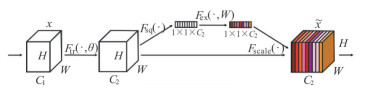
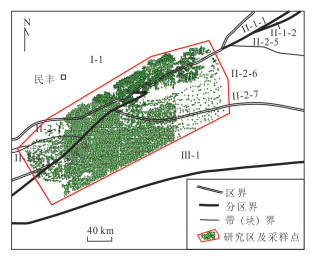
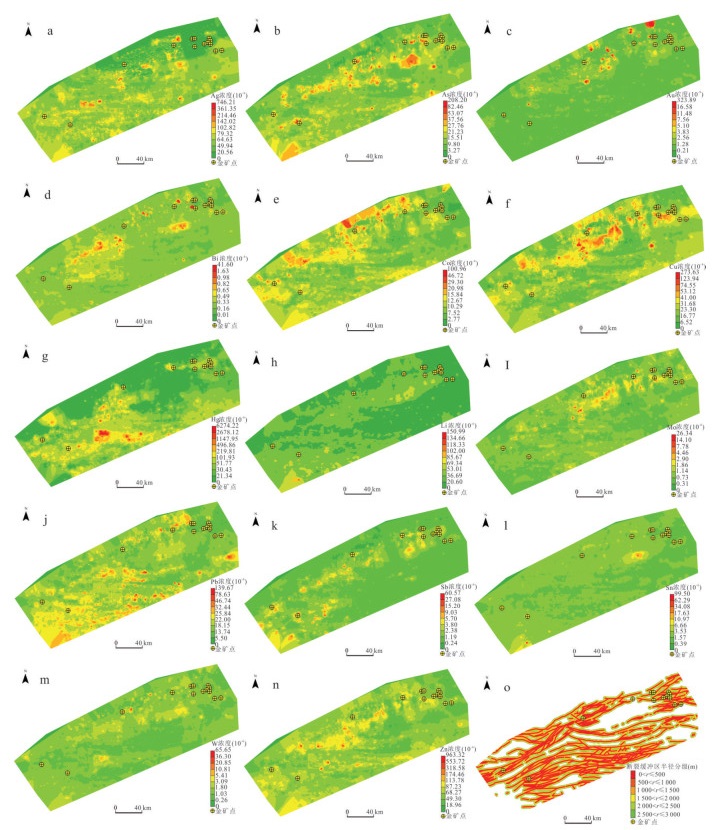
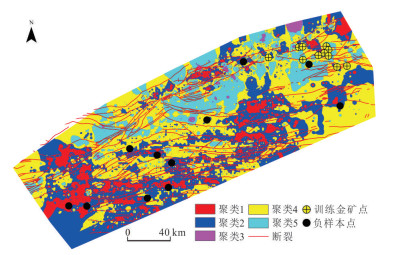
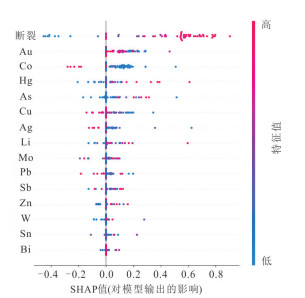
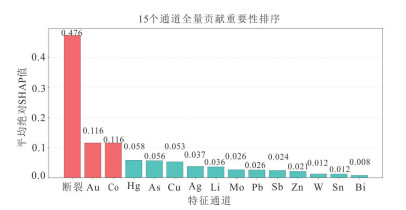
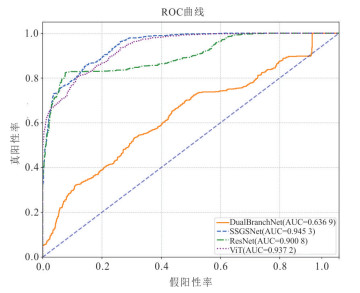
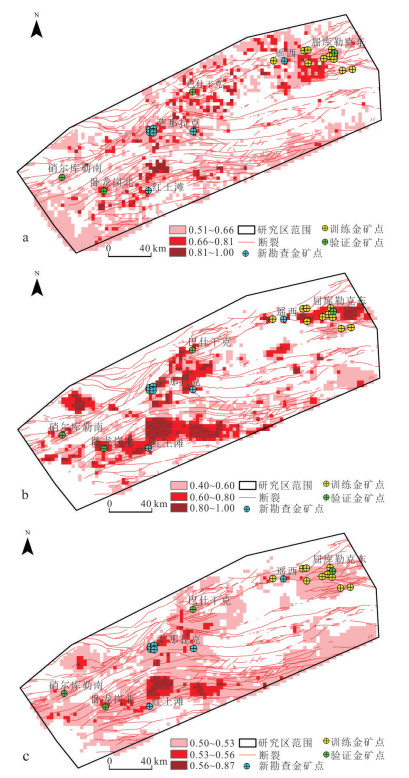
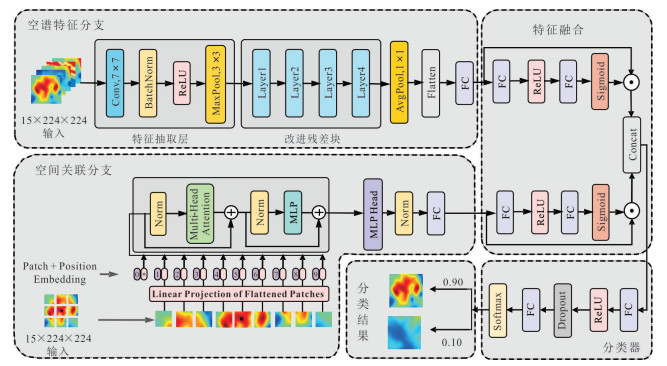
Establishing a detection model that can take into account the multi-element geochemical spatial-spectral characteristics and effectively fit the complex distribution of data is the key to identification of abnormal areas. In response to the challenge of extracting geochemical prospecting anomalies in the high-altitude, deep-cutting, and shallow-coverage areas of the Eastern Kunlun Mountains in Xinjiang, this study proposes a Spatial-Spectral Feature and Global Spatial Correlation Network (SSGSNet). Based on ResNet residual blocks, the spatial-spectral feature branch is integrates a dual-attention module to extract local spatial-spectral features, with the spatial correlation branch using patch embedding and self-attention mechanisms to mine global spatial correlation features. Incorporating tectonic data improves the accuracy of geochemical prospecting, and SHAP values explain the critical role of faults within the model. Experimental results show that the AUC value of the SSGSNet model reaches 0.945 3, significantly outperforming the ResNet and ViT single models as well as the conventional spatial-spectral dual-branch model. Field verification shows that gold mineralization phenomena of varying degrees were found in four high-anomaly areas, including Yaoxi and Bashiganike, which confirms that the model can effectively solve the problem of extracting complex background geochemical anomaly information, providing reliable technical support and target area guidance for mineral exploration in covered areas.

|
Chen, G. X., Cheng, Q. M., 2018. Fractal-Based Wavelet Filter for Separating Geophysical or Geochemical Anomalies from Background. Mathematical Geosciences, 50(3): 249-272. https://doi.org/10.1007/s11004-017-9707-9
|
|
Cheng, Q. M., Agterberg, F. P., 1996. Multifractal Modeling and Spatial Statistics. Mathematical Geology, 28(1): 1-16. https://doi.org/10.1007/BF02273520
|
|
Cheng, Q. M., Agterberg, F. P., Ballantyne, S. B., 1994. The Separation of Geochemical Anomalies from Background by Fractal Methods. Journal of Geochemical Exploration, 51(2): 109-130. https://doi.org/10.1016/0375-6742(94)90013-2
|
|
Cheng, Q. M., Xu, Y. G., Grunsky, E., 2000. Integrated Spatial and Spectrum Method for Geochemical Anomaly Separation. Natural Resources Research, 9(1): 43-52. https://doi.org/10.1023/A:1010109829861
|
|
Ding, K., Xue, L. F., Ran, X. J., et al., 2023. CNN2D-SENet-Based Prospecting Prediction Method: A Case Study from the Cu Deposits in the Zhunuo Mineral Concentrate Area in Tibet. Minerals, 13(6): 730. https://doi.org/10.3390/min13060730
|
|
Dosovitskiy, A., Beyer, L., Kolesnikov, A., et al., 2020. An Image Is Worth 16×16 Words: Transformers for Image Recognition at Scale. arXiv, 2010.11929.
|
|
Guo, L., Bai, H., Xing, L., et al., 2020. Metallogenic Regularity and Metallogenic Model of Late Paleozoic Hydrothermal Gold-Antimony Deposits in the Muztag Area, East Kunlun, Xinjiang. West-China Exploration Engineering, 32(5): 114-117 (in Chinese with English abstract).
|
|
Harris, R. J., 2001. A Primer of Multivariate Statistics (3rd Edition). Psychology Press, New York. https://doi.org/10.4324/9781410600455
|
|
Hu, J., Shen, L., Sun, G., 2018. Squeeze- and -Excitation Networks. 2018 IEEE/CVF Conference on Computer Vision and Pattern Recognition. Salt Lake City.
|
|
Li, Z. T., Xue, L. F., Ran, X. J., et al., 2022. Intelligent Prospect Prediction Method Based on Convolutional Neural Network: A Case Study of Copper Deposits in Longshoushan Area, Gansu Province. Journal of Jilin University (Earth Science Edition), 52(2): 418-433 (in Chinese with English abstract).
|
|
Liu, Y. P., Zhu, L. X., Zhou, Y. Z., 2020. Experimental Research on Big Data Mining and Intelligent Prediction of Prospecting Target Area—Application of Convolutional Neural Network Model. Geotectonica et Metallogenia, 44(2): 192-202 (in Chinese with English abstract).
|
|
Luo, Z. J., Xiong, Y. H., Zuo, R. G., 2020. Recognition of Geochemical Anomalies Using a Deep Variational Autoencoder Network. Applied Geochemistry, 122: 104710. https://doi.org/10.1016/j.apgeochem.2020.104710
|
|
Luo, Z. J., Zuo, R. G., 2025. Causal Discovery and Deep Learning Algorithms for Detecting Geochemical Patterns Associated with Gold-Polymetallic Mineralization: A Case Study of the Edongnan Region. Mathematical Geosciences, 57(1): 193-220. https://doi.org/10.1007/s11004-024-10153-6
|
|
Masci, J., Meier, U., Cireşan, D., et al., 2011. Stacked Convolutional Auto-Encoders for Hierarchical Feature Extraction. Springer, Berlin. https://doi.org/10.1007/978-3-642-21735-7_7
|
|
Reimann, C., Filzmoser, P., Garrett, R. G., et al., 2008. Statistical Data Analysis Explained: Applied Environmental Statistics with R. Wiley, Hoboken.
|
|
Wang, J., Zuo, R. G., Caers, J., 2017. Discovering Geochemical Patterns by Factor-Based Cluster Analysis. Journal of Geochemical Exploration, 181: 106-115. https://doi.org/10.1016/j.gexplo.2017.07.006
|
|
Wang, Z. Y., Li, T., Zuo, R. G., 2024. Leucogranite Mapping via Convolutional Recurrent Neural Networks and Geochemical Survey Data in the Himalayan Orogen. Geoscience Frontiers, 15(1): 101715. https://doi.org/10.1016/j.gsf.2023.101715
|
|
Xin, L., 2023. Genesis of the Large Qukulekedong Au-Sb Deposit, East Kunlun Orogen, China (Dissertation). Chengdu University of Technology, Chengdu (in Chinese with English abstract).
|
|
Xiong, Y. H., Zuo, R. G., Luo, Z. J., et al., 2022. A Physically Constrained Variational Autoencoder for Geochemical Pattern Recognition. Mathematical Geosciences, 54(4): 783-806. https://doi.org/10.1007/s11004-021-09979-1
|
|
Xiong, Y. H., Zuo, R. G., Wang, K. X., et al., 2018. Identification of Geochemical Anomalies via Local RX Anomaly Detector. Journal of Geochemical Exploration, 189: 64-71. https://doi.org/10.1016/j.gexplo.2017.06.021
|
|
Xu, Y., Shi, L. Y., Zuo, R. G., 2024. Geologically Constrained Unsupervised Dual-Branch Deep Learning Algorithm for Geochemical Anomalies Identification. Applied Geochemistry, 174: 106137. https://doi.org/10.1016/j.apgeochem.2024.106137
|
|
Xu, Y., Zuo, R. G., 2024. An Interpretable Graph Attention Network for Mineral Prospectivity Mapping. Mathematical Geosciences, 56(2): 169-190. https://doi.org/10.1007/s11004-023-10076-8
|
|
Xu, Y., Zuo, R. G., Zhang, G. B., 2023. The Graph Attention Network and Its Post-Hoc Explanation for Recognizing Mineralization-Related Geochemical Anomalies. Applied Geochemistry, 155: 105722. https://doi.org/10.1016/j.apgeochem.2023.105722
|
|
Yang, J. X., Zhao, Y. Q., Chan, J. C., 2017. Learning and Transferring Deep Joint Spectral-Spatial Features for Hyperspectral Classification. IEEE Transactions on Geoscience and Remote Sensing, 55(8): 4729-4742. https://doi.org/10.1109/TGRS.2017.2698503
|
|
Yin, B. J., Zuo, R. G., Xiong, Y. H., et al., 2021. Knowledge Discovery of Geochemical Patterns from a Data-Driven Perspective. Journal of Geochemical Exploration, 231: 106872. https://doi.org/10.1016/j.gexplo.2021.106872
|
|
Yousefi, M., Kamkar-Rouhani, A., Carranza, E. J. M., 2014. Application of Staged Factor Analysis and Logistic Function to Create a Fuzzy Stream Sediment Geochemical Evidence Layer for Mineral Prospectivity Mapping. Geochemistry: Exploration, Environment, Analysis, 14(1): 45-58. https://doi.org/10.1144/geochem2012-144
|
|
Yu, S. Y., Deng, H., Liu, Z. K., et al., 2024. Identification of Geochemical Anomalies Using an End-to-End Transformer. Natural Resources Research, 33(3): 973-994. https://doi.org/10.1007/s11053-024-10334-4
|
|
Yu, X. L., Li, H., Wei, X. L., et al., 2025. Zircon U-Pb Age and Geochemical Characteristics of Granitic Magmatic Rocks in Mailong Gold Deposit, East Kunlun, and Their Geological Significance. Earth Science, 50(6): 2107-2123 (in Chinese with English abstract).
|
|
Zhang, C. J., Zuo, R. G., Xiong, Y. H., 2021. Detection of the Multivariate Geochemical Anomalies Associated with Mineralization Using a Deep Convolutional Neural Network and a Pixel-Pair Feature Method. Applied Geochemistry, 130: 104994. https://doi.org/10.1016/j.apgeochem.2021.104994
|
|
Zuo, R. G., 2019. Exploration Geochemical Data Mining and Weak Geochemical Anomalies Identification. Earth Science Frontiers, 26(4): 67-75 (in Chinese with English abstract).
|
|
Zuo, R. G., Carranza, E. J. M., Wang, J., 2016. Spatial Analysis and Visualization of Exploration Geochemical Data. Earth-Science Reviews, 158: 9-18. https://doi.org/10.1016/j.earscirev.2016.04.006
|
|
Zuo, R. G., Cheng, Q. M., Xu, Y., et al., 2024. Explainable Artificial Intelligence Models for Mineral Prospectivity Mapping. Scientia Sinica (Terrae), 54(9): 2917-2928 (in Chinese with English abstract). doi: 10.1360/N072024-0018
|
|
Zuo, R. G., Wang, J., Chen, G. X., et al., 2015. Identification of Weak Anomalies: A Multifractal Perspective. Journal of Geochemical Exploration, 148: 12-24. https://doi.org/10.1016/j.gexplo.2014.05.005
|
|
Zuo, R. G., Xiong, Y. H., Wang, J., et al., 2019. Deep Learning and Its Application in Geochemical Mapping. Earth-Science Reviews, 192: 1-14. https://doi.org/10.1016/j.earscirev.2019.02.023
|
|
Zuo, R. G., Xu, Y., 2023. Graph Deep Learning Model for Mapping Mineral Prospectivity. Mathematical Geosciences, 55(1): 1-21. https://doi.org/10.1007/s11004-022-10015-z
|
|
Zuo, R. G., Xu, Y., 2024. A Physically Constrained Hybrid Deep Learning Model to Mine a Geochemical Data Cube in Support of Mineral Exploration. Computers & Geosciences, 182: 105490. https://doi.org/10.1016/j.cageo.2023.105490
|
|
郭利, 柏辉, 邢令, 等, 2020. 新疆东昆仑木孜塔格地区晚古生代热液型金锑矿成矿规律及成矿模式. 西部探矿工程, 32(5): 114-117.
|
|
李忠潭, 薛林福, 冉祥金, 等, 2022. 基于卷积神经网络的智能找矿预测方法: 以甘肃龙首山地区铜矿为例. 吉林大学学报(地球科学版), 52(2): 418-433.
|
|
刘艳鹏, 朱立新, 周永章, 2020. 大数据挖掘与智能预测找矿靶区实验研究: 卷积神经网络模型的应用. 大地构造与成矿学, 44(2): 192-202.
|
|
邢令, 2023. 东昆仑屈库勒克东大型Au-Sb矿床成因研究(博士学位论文). 成都: 成都理工大学.
|
|
于小亮, 李华, 魏小林, 等, 2025. 东昆仑迈龙金矿区花岗质岩浆岩锆石U-Pb定年和地球化学特征及其地质意义. 地球科学, 50(6): 2107-2123. doi: 10.3799/dqkx.2025.046
|
|
左仁广, 2019. 勘查地球化学数据挖掘与弱异常识别. 地学前缘, 26(4): 67-75.
|
|
左仁广, 成秋明, 许莹, 等, 2024. 可解释性矿产预测人工智能模型. 中国科学: 地球科学, 54(9): 2917-2928.
|
Figures(11) / Tables(3)


 DownLoad: