- 中文版:
- EI 100%收录
- 英文版
- SCI 100%收录


中国出版政府奖提名奖
中国百强科技报刊
湖北出版政府奖
中国高校百佳科技期刊
中国最美期刊
中国出版政府奖提名奖
中国百强科技报刊
湖北出版政府奖
中国高校百佳科技期刊
中国最美期刊
| Citation: | Liu Zhankun, Hao Zihe, Deng Hao, Chen Yudong, Wu Lubo, Huang Juexuan, Chen Jin, Mao Xiancheng, 2026. 3D Reconstruction of Fluid Migration Pathways of Hydrothermal Gold Systems and Prospecting Prediction. Earth Science, 51(3): 881-895. doi: 10.3799/dqkx.2026.071

|
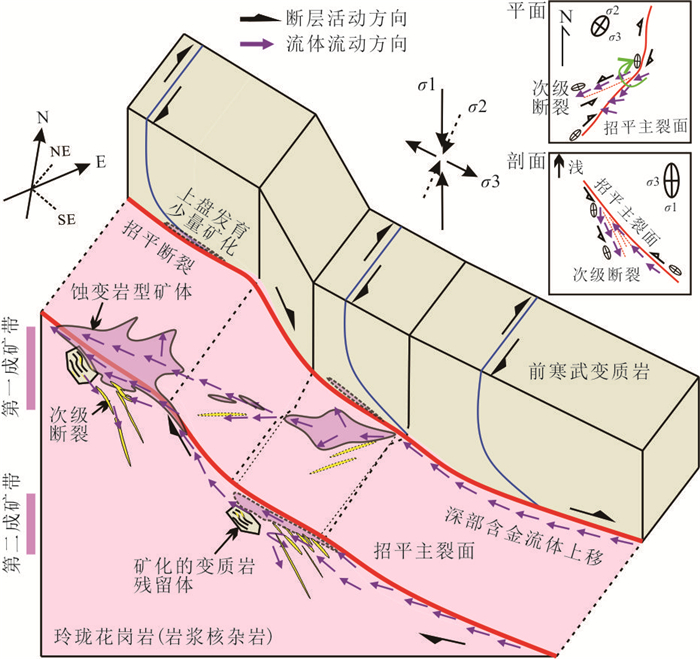
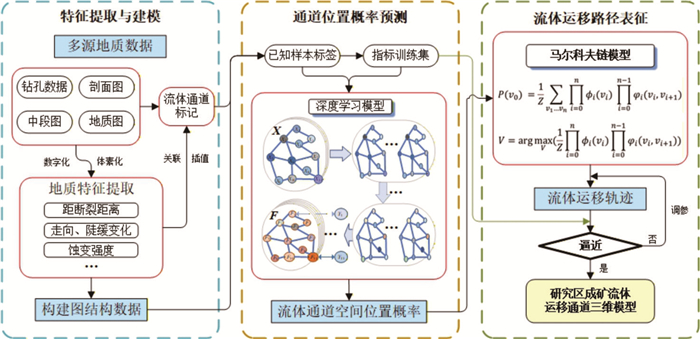
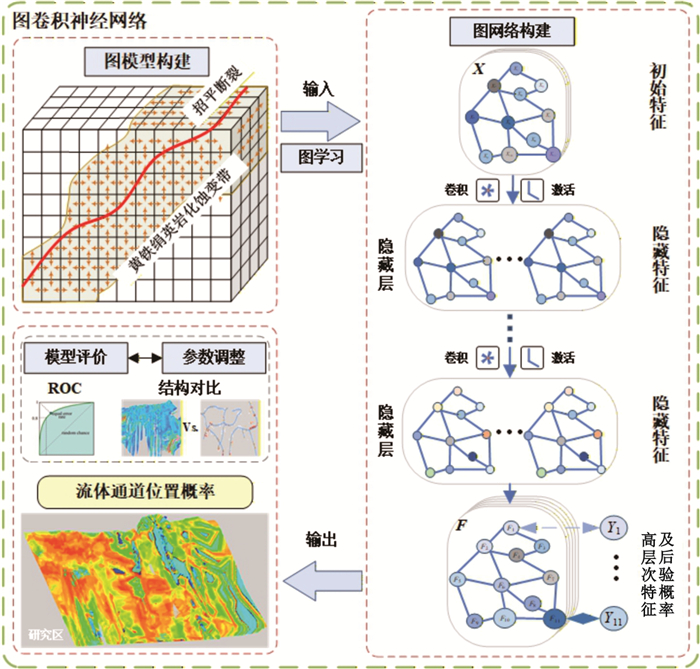
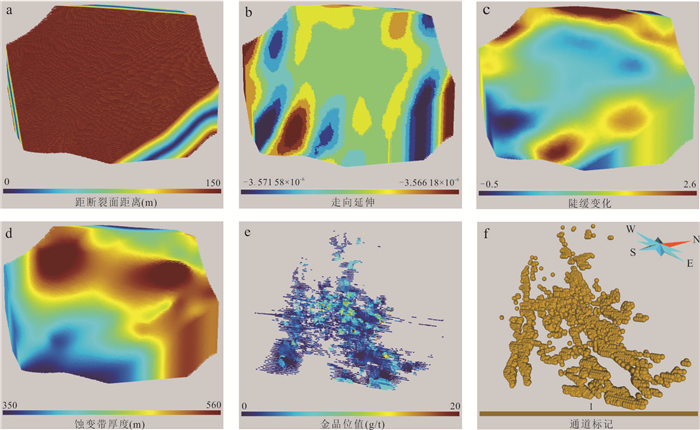
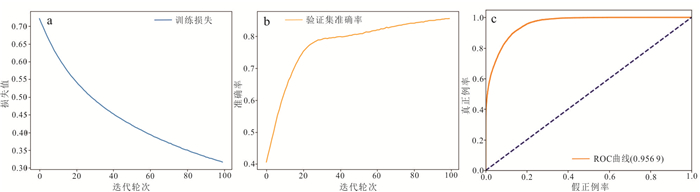
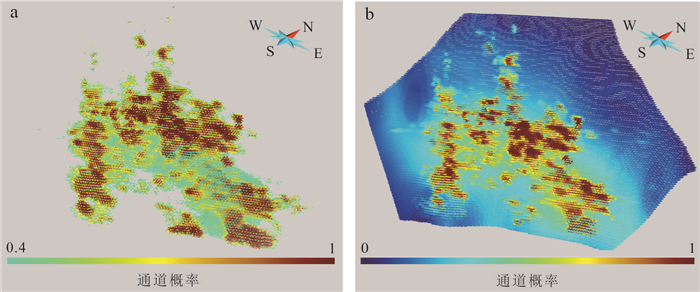
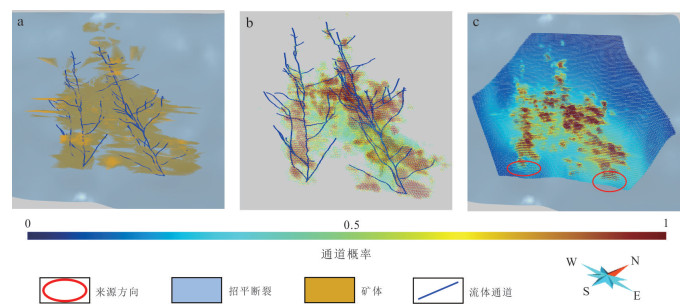
Three-dimensional reconstruction of fluid pathways is critical to understanding ore genesis and guiding exploration since hydrothermal fluid migration pathways exert a fundamental control on the transport, concentration, and precipitation of ore-forming fluids. However, robust three-dimensional reconstruction of fluid pathways at the deposit scale remains challenging due to complex structural overprinting, sparse sampling, and limited quantitative tools. Here, we present an integrated knowledge and data-driven framework to reconstruct the 3D hydrothermal fluid migration pathways of the Xiadian gold deposit in the Jiaodong Peninsula. Geological indicators related to fluid flow were extracted from drill-hole and mine-level datasets and incorporated into a spatial probability model using a Graph Convolutional Network (GCN). A Markov chain model was subsequently applied to quantitatively trace three-dimensional migration trajectories. The GCN demonstrates strong predictive performance under small-sample conditions (AUC=0.956 9), delineating high-probability fluid pathways that are consistent with established metallogenic models. The reconstructed pathways indicate that ore-forming fluids originated at depth and migrated upward along the Zhaoping Fault Zone, exhibiting a branching and diffusive architecture. Major fluid conduits are primarily controlled by deep-seated structural variations of the main fault, whereas dense terminal branch networks are dominated by secondary faults and fracture systems, reflecting a synergistic structural control on fluid migration and mineral precipitation. The results confirm the existence of a conceptual model of "transport along major conduits and precipitation within terminal branches" in Xiadian gold deposit, providing new insights into the coupling between tectonics, fluid flow, and mineralization. On this basis, two prospective targets for deep exploration within the Xiadian deposit are identified.

|
An, W. T., Chen, J. P., Zhu, P. F., 2021. A Two-Way Forecasting Method Based on Numerical Simulation of Mineralization Process for the Prediction of Concealed Ore Deposits. Earth Science Frontiers, 28(3): 97-111 (in Chinese with English abstract).
|
|
Arya, S., Mount, D. M., Netanyahu, N. S., et al., 1998. An Optimal Algorithm for Approximate Nearest Neighbor Searching Fixed Dimensions. Journal of the ACM, 45(6): 891-923. https://doi.org/10.1145/293347.293348
|
|
Atwood, J., Towsley, D., 2016. Diffusion-Convolutional Neural Networks. 29th Conference on Neural Information Processing Systems (NIPS 2016), Barcelona.
|
|
Battaglia, P. W., Hamrick, J. B., Bapst, V., et al., 2018. Relational Inductive Biases, Deep Learning, and Graph Networks. arXiv, 1806.01261.
|
|
Campos, L. M., Toledo, C. L. B., Silva, A. M., et al., 2022. The Hydrothermal Footprint of the Crixás Deposit: New Vectors for Orogenic Gold Exploration in Central Brazil. Ore Geology Reviews, 146: 104925. https://doi.org/10.1016/j.oregeorev.2022.104925
|
|
Chai, P., Hou, Z. Q., Zhang, Z. Y., 2017. Geology, Fluid Inclusion and Stable Isotope Constraints on the Fluid Evolution and Resource Potential of the Xiadian Gold Deposit, Jiaodong Peninsula. Resource Geology, 67(3): 341-359. https://doi.org/10.1111/rge.12134
|
|
Chen, G. H., Liu, Z. K., Chen, G. D., et al., 2024a. Deep Gold Prospectivity Modeling in the Jiaojia Gold Belt, Jiaodong Peninsula, Eastern China Using Machine Learning of Geometric and Geodynamic Variables. Frontiers in Earth Science, 12: 1308426. https://doi.org/10.3389/feart.2024.1308426
|
|
Chen, J., Mao, X. C., Deng, H., et al., 2020. Three-Dimensional Modelling of Alteration Zones Based on Geochemical Exploration Data: An Interpretable Machine-Learning Approach via Generalized Additive Models. Applied Geochemistry, 123: 104781. https://doi.org/10.1016/j.apgeochem.2020.104781
|
|
Chen, Y. D., Liu, Z. K., Wang, R. C., et al., 2024b. New Insights into the Metallogenic Genesis of the Xiadian Au Deposit, Jiaodong Peninsula, Eastern China: Constraints from Integrated Rutile In-Situ Geochemical Analysis and Machine Learning Discrimination. Ore Geology Reviews, 171: 106184. https://doi.org/10.1016/j.oregeorev.2024.106184
|
|
Cheng, Q. M., 2025. A New Paradigm for Mineral Resource Prediction Based on Human Intelligence-Artificial Intelligence Integration. Earth Science Frontiers, 32(4): 1-19 (in Chinese with English abstract).
|
|
Cirpka, O. A., Stettler, M. M., Dentz, M., 2022. Spatial Markov Model for the Prediction of Travel-Time-Based Solute Dispersion in Three-Dimensional Heterogeneous Media. Water Resources Research, 58(6): e2022WR032215. https://doi.org/10.1029/2022WR032215
|
|
Cowan, E. J., 2020. Deposit-Scale Structural Architecture of the Sigma-Lamaque Gold Deposit, Canada—Insights from a Newly Proposed 3D Method for Assessing Structural Controls from Drill Hole Data. Mineralium Deposita, 55(2): 217-240. https://doi.org/10.1007/s00126-019-00949-6
|
|
Deng, H., Huang, J. X., Liu, Z. K., et al., 2024. Hidden Markov Model for Spatial Analysis of Three-Dimensional Mineralization Distribution: Insights into Magma Flow and Mineral Exploration Targets in the Jinchuan Ni-Cu-(PGE) Sulfide Deposit, China. Applied Geochemistry, 162: 105911. https://doi.org/10.1016/j.apgeochem.2024.105911
|
|
Deng, H., Zheng, Y., Chen, J., et al., 2022a. Learning 3D Mineral Prospectivity from 3D Geological Models Using Convolutional Neural Networks: Application to a Structure-Controlled Hydrothermal Gold Deposit. Computers & Geosciences, 161: 105074. https://doi.org/10.1016/j.cageo.2022.105074
|
|
Deng, J., Sun, Z. S., Wang, Q. F., et al., 2003. Crust-Mantle Structures and Gold Enrichment Mechanism of Mantle Fluid System. Chinese Journal of Geochemistry, 22(3): 263-270. https://doi.org/10.1007/BF02842870
|
|
Deng, J., Wang, Q. F., Liu, X. F., et al., 2022b. The Formation of the Jiaodong Gold Province. Acta Geologica Sinica (English Edition), 96(6): 1801-1820. https://doi.org/10.1111/1755-6724.15026
|
|
Deng, J., Wang, Q. F., Yang, L. Q., et al., 2005. An Analysis of the Interior Structure of the Gold Hydrothermal Metallogenic System of the Northwestern Jiaodong Peninsula, Shandong Province. Earth Science, 30(1): 102-108 (in Chinese with English abstract).
|
|
Deng, J., Yang, L. Q., Groves, D. I., et al., 2020. An Integrated Mineral System Model for the Gold Deposits of the Giant Jiaodong Province, Eastern China. Earth-Science Reviews, 208: 103274. https://doi.org/10.1016/j.earscirev.2020.103274
|
|
Gilmer, J., Schoenholz, S. S., Riley, P. F., et al., 2017. Neural Message Passing for Quantum Chemistry. 34th International Conference on Machine Learning, Sydney.
|
|
Goldfarb, R., Qiu, K., Deng, J., et al., 2019. Orogenic Gold Deposits of China. In: Chang, Z. S., Goldfarb, R. J., eds., Mineral Deposits of China, Society of Economic Geologists, Littleton.
|
|
Groves, D. I., Santosh, M., Goldfarb, R. J., et al., 2018. Structural Geometry of Orogenic Gold Deposits: Implications for Exploration of World-Class and Giant Deposits. Geoscience Frontiers, 9(4): 1163-1177. https://doi.org/10.1016/j.gsf.2018.01.006
|
|
Guo, J. T., Liu, Y. H., Han, Y. F., et al., 2019. Implicit 3D Geological Modeling Method for Borehole Data Based on Machine Learning. Journal of Northeastern University (Natural Science), 40(9): 1337-1342 (in Chinese with English abstract).
|
|
Guo, T., Deng, J., Lü, G. X., et al., 2008. The Channel Way, Style and Driving Mechanism of Ore Fluid Migration in the Jiaojia Gold Deposit. Acta Geoscientica Sinica, 29(1): 81-88 (in Chinese with English abstract).
|
|
Han, R. S., Liu, F., Zhang, Y., 2025. Discussion on Ore-Controlling Roles of Structural System in Hydrothermal Metallogenic System. Earth Science Frontiers, 32(2): 371-389 (in Chinese with English abstract).
|
|
Henry, A. D., McInnes, P., Tosdal, R. M., 2014. Structural Evolution of Auriferous Veins at the Endeavour 42 Gold Deposit, Cowal Mining District, NSW, Australia. Economic Geology, 109(4): 1051-1077. https://doi.org/10.2113/econgeo.109.4.1051
|
|
Hickey, K. A., Ahmed, A. D., Barker, S. L. L., et al., 2014. Fault-Controlled Lateral Fluid Flow underneath and into a Carlin-Type Gold Deposit: Isotopic and Geochemical Footprints. Economic Geology, 109(5): 1431-1460. https://doi.org/10.2113/econgeo.109.5.1431
|
|
Hillier, M., Wellmann, F., Brodaric, B., et al., 2021. Three-Dimensional Structural Geological Modeling Using Graph Neural Networks. Mathematical Geosciences, 53(8): 1725-1749. https://doi.org/10.1007/s11004-021-09945-x
|
|
Hood, S. B., Cracknell, M. J., Gazley, M. F., et al., 2019. Element Mobility and Spatial Zonation Associated with the Archean Hamlet Orogenic Au Deposit, Western Australia: Implications for Fluid Pathways in Shear Zones. Chemical Geology, 514: 10-26. https://doi.org/10.1016/j.chemgeo.2019.03.022
|
|
Hou, W. S., Wu, X. C., Liu, X. G., 2007. 3D Sealed Geological Block Modeling with Wire Frame Component. Journal of Jilin University (Earth Science Edition), 37(5): 1047-1051 (in Chinese with English abstract).
|
|
Hronsky, J. M. A., 2020. Deposit-Scale Structural Controls on Orogenic Gold Deposits: An Integrated, Physical Process-Based Hypothesis and Practical Targeting Implications. Mineralium Deposita, 55(2): 197-216. https://doi.org/10.1007/s00126-019-00918-z
|
|
Huang, J. X., Deng, H., Mao, X. C., et al., 2023. 3D Modeling of Detachment Faults in the Jiaodong Gold Province, Eastern China: A Bayesian Inference Perspective and Its Exploration Implications. Ore Geology Reviews, 154: 105307. https://doi.org/10.1016/j.oregeorev.2023.105307
|
|
Huang, J. X., Deng, H., Mao, X. C., et al., 2024. A Global-Local Collaborative Approach to Quantifying Spatial Non-Stationarity in Three-Dimensional Mineral Prospectivity Modeling. Ore Geology Reviews, 168: 106069. https://doi.org/10.1016/j.oregeorev.2024.106069
|
|
Javanmard, H., Saar, M. O., Vogler, D., 2022. On the Applicability of Connectivity Metrics to Rough Fractures under Normal Stress. Advances in Water Resources, 161: 104122. https://doi.org/10.1016/j.advwatres.2022.104122
|
|
Kang, P. K., Dentz, M., Le Borgne, T., et al., 2017. Anomalous Transport in Disordered Fracture Networks: Spatial Markov Model for Dispersion with Variable Injection Modes. Advances in Water Resources, 106: 80-94. https://doi.org/10.1016/j.advwatres.2017.03.024
|
|
Kipf, T. N., Welling, M., 2017. Semi-Supervised Classification with Graph Convolutional Networks. arXiv, 1609.02907.
|
|
Koegelenberg, C., Kisters, A. F. M., Harris, C., 2016. Structural Controls of Fluid Flow and Gold Mineralization in the Easternmost Parts of the Karagwe-Ankole Belt of North-Western Tanzania. Ore Geology Reviews, 77: 332-349. https://doi.org/10.1016/j.oregeorev.2016.03.010
|
|
Launay, G., Sizaret, S., Guillou-Frottier, L., et al., 2018. Deciphering Fluid Flow at the Magmatic-Hydrothermal Transition: A Case Study from the World-Class Panasqueira W-Sn-(Cu) Ore Deposit (Portugal). Earth and Planetary Science Letters, 499: 1-12. https://doi.org/10.1016/j.epsl.2018.07.012
|
|
Le Borgne, T., Dentz, M., Carrera, J., 2008. Spatial Markov Processes for Modeling Lagrangian Particle Dynamics in Heterogeneous Porous Media. Physical Review E, 78(2): 026308. https://doi.org/10.1103/physreve.78.026308
|
|
Li, Z. H., Chi, G. X., Bethune, K. M., et al., 2017. Structural Controls on Fluid Flow during Compressional Reactivation of Basement Faults: Insights from Numerical Modeling for the Formation of Unconformity-Related Uranium Deposits in the Athabasca Basin, Canada. Economic Geology, 112(2): 451-466. https://doi.org/10.2113/econgeo.112.2.451
|
|
Lin, J. J., Ma, R., Sun, Z. Y., et al., 2023. Assessing the Connectivity of a Regional Fractured Aquifer Based on a Hydraulic Conductivity Field Reversed by Multi-Well Pumping Tests and Numerical Groundwater Flow Modeling. Journal of Earth Science, 34(6): 1926-1939. https://doi.org/10.1007/s12583-022-1674-5
|
|
Liu, J. C., Wang, J. Y., Liu, Y., et al., 2018. Ore Genesis of the Xiadian Gold Deposit, Jiaodong Peninsula, East China: Information from Fluid Inclusions and Mineralization. Geological Journal, 53(S1): 77-95. https://doi.org/10.1002/gj.3042
|
|
Liu, X. F., Deng, J., Liang, Y. Y., et al., 2020. Geochemical, Mineralogical and Chronological Studies of Mafic-Intermediate Dykes in the Jiaodong Peninsula: Implications for Late Mesozoic Mantle Source Metasomatism and Lithospheric Thinning of the Eastern North China Craton. International Geology Review, 62(18): 2239-2260. https://doi.org/10.1080/00206814.2019.1692253
|
|
Liu, Z. K., Chen, J., Mao, X. C., et al., 2021a. Spatial Association between Orogenic Gold Mineralization and Structures Revealed by 3D Prospectivity Modeling: A Case Study of the Xiadian Gold Deposit, Jiaodong Peninsula, China. Natural Resources Research, 30(6): 3987-4007. https://doi.org/10.1007/s11053-021-09956-9
|
|
Liu, Z. K., Hollings, P., Mao, X. C., et al., 2021b. Metal Remobilization from Country Rocks into the Jiaodong-Type Orogenic Gold Systems, Eastern China: New Constraints from Scheelite and Galena Isotope Results at the Xiadian and Majiayao Gold Deposits. Ore Geology Reviews, 134: 104126. https://doi.org/10.1016/j.oregeorev.2021.104126
|
|
Mao, X. C., Chen, Y. D., Liu, Z. K., et al., 2024b. Hydrothermal Alteration and Its Geochemistry of the Xiadian Gold Deposit, Jiaodong Peninsula, China: Implications for Fluid-Rock Interaction Processes and Mineral Exploration. Ore Geology Reviews, 170: 106134. https://doi.org/10.1016/j.oregeorev.2024.106134
|
|
Mao, X. C., Deng, H., Chen, J., et al., 2024. Theory and Methods for Three-Dimensional Intelligent Prospectivity Mapping of Deep Resources in Metal Mines. Mineral Exploration, 15(8): 1365-1378 (in Chinese with English abstract).
|
|
Mao, X. C., Duan, X. M., Deng, H., et al., 2026. Intelligent 3D Prediction of Deep Mineral Resources: Theory, Methods, and Challenges. Earth Science, 51(3): 793-815 (in Chinese with English abstract).
|
|
Mao, X. C., Zhong, H. T., Liu, Z. K., et al., 2024a. 3D Numerical Modeling for Investigating Structural Controls on Orogenic Gold Mineralization, Sanshandao Gold Belt, Eastern China. Natural Resources Research, 33(4): 1413-1437. https://doi.org/10.1007/s11053-024-10353-1
|
|
Murphy, K. P., 2012. Machine Learning: A Probabilistic Perspective. MIT Press, Cambridge.
|
|
Pfaff, T., Fortunato, M., Sanchez-Gonzalez, A., Battaglia, P., 2020. Learning Mesh-Based Simulation with Graph Networks. International Conference on Learning Representations 2020, Online.
|
|
Rubin, Y., 2003. Applied Stochastic Hydrogeology. Oxford University Press, Oxford.
|
|
Samet, H., 2006. Foundations of Multidimensional and Metric Data Structures. Morgan Kaufmann, San Francisco.
|
|
Sanchez-Gonzalez, A., Godwin, J., Pfaff, T., et al., 2020. Learning to Simulate Complex Physics with Graph Networks. arXiv, 2002.09405.
|
|
Sherman, T., Engdahl, N. B., Porta, G., et al., 2021. A Review of Spatial Markov Models for Predicting Pre-Asymptotic and Anomalous Transport in Porous and Fractured Media. Journal of Contaminant Hydrology, 236: 103734. https://doi.org/10.1016/j.jconhyd.2020.103734
|
|
Shilunga, J., Kisters, A., 2022. Lithological and Structural Controls of Disseminated-Type Orogenic Gold Mineralization in High-Grade Metamorphic Turbidites from the Central Zone of the Damara Belt, Namibia. Ore Geology Reviews, 151: 105205. https://doi.org/10.1016/j.oregeorev.2022.105205
|
|
Sibson, R. H., Robert, F., Poulsen, K. H., 1988. High-Angle Reverse Faults, Fluid-Pressure Cycling, and Mesothermal Gold-Quartz Deposits. Geology, 16(6): 551. https://doi.org/10.1130/0091-7613(1988)0160551:harffp>2.3.co;2 doi: 10.1130/0091-7613(1988)0160551:harffp>2.3.co;2
|
|
Torremans, K., Kyne, R., Doyle, R., et al., 2018. Controls on Metal Distributions at the Lisheen and Silvermines Deposits: Insights into Fluid Flow Pathways in Irish-Type Zn-Pb Deposits. Economic Geology, 113(7): 1455-1477. https://doi.org/10.5382/econgeo.2018.4598
|
|
Wang, S. R., Yang, L. Q., Wang, J. G., et al., 2019. Geostatistical Determination of Ore Shoot Plunge and Structural Control of the Sizhuang World-Class Epizonal Orogenic Gold Deposit, Jiaodong Peninsula, China. Minerals, 9(4): 214. https://doi.org/10.3390/min9040214
|
|
Wang, Z. Y., Wang, D., Qiu, K. F., et al., 2025. Applications and Perspectives of Machine Learning in Geochemical Big Data Mining of Minerals and Rocks. Journal of Chengdu University of Technology (Science & Technology Edition), 52(5): 844-858 (in Chinese with English abstract).
|
|
Wu, Z. H., Pan, S. R., Chen, F. W., et al., 2021. A Comprehensive Survey on Graph Neural Networks. IEEE Transactions on Neural Networks and Learning Systems, 32(1): 4-24. https://doi.org/10.1109/TNNLS.2020.2978386
|
|
Xiang, J., Xiao, K. Y., Carranza, E. J. M., et al., 2020. 3D Mineral Prospectivity Mapping with Random Forests: A Case Study of Tongling, Anhui, China. Natural Resources Research, 29(1): 395-414. https://doi.org/10.1007/s11053-019-09578-2
|
|
Xiao, F., Chen, X. Y., Cheng, Q. M., 2024. Combining Numerical Modeling and Machine Learning to Predict Mineral Prospectivity: A Case Study from the Fankou Pb-Zn Deposit, Southern China. Applied Geochemistry, 160: 105857. https://doi.org/10.1016/j.apgeochem.2023.105857
|
|
Xiong, Y. H., Zuo, R. G., 2020. Recognizing Multivariate Geochemical Anomalies for Mineral Exploration by Combining Deep Learning and One-Class Support Vector Machine. Computers & Geosciences, 140: 104484. https://doi.org/10.1016/j.cageo.2020.104484
|
|
Yang, K. F., Fan, H. R., Santosh, M., et al., 2012. Reactivation of the Archean Lower Crust: Implications for Zircon Geochronology, Elemental and Sr-Nd-Hf Isotopic Geochemistry of Late Mesozoic Granitoids from Northwestern Jiaodong Terrane, the North China Craton. Lithos, 146: 112-127. https://doi.org/10.1016/j.lithos.2012.04.035
|
|
Yang, L. Q., Deng, J., Wang, Z. L., et al., 2016. Relationships between Gold and Pyrite at the Xincheng Gold Deposit, Jiaodong Peninsula, China: Implications for Gold Source and Deposition in a Brittle Epizonal Environment. Economic Geology, 111(1): 105-126. https://doi.org/10.2113/econgeo.111.1.105
|
|
Yang, L. Q., Yang, W., Zhang, L., et al., 2024. Developing Structural Control Models for Hydrothermal Metallogenic Systems: Theoretical and Methodological Principles and Applications. Earth Science Frontiers, 31(1): 239-266 (in Chinese with English abstract).
|
|
Yang, L., Zhao, R., Wang, Q. F., et al., 2018. Fault Geometry and Fluid-Rock Reaction: Combined Controls on Mineralization in the Xinli Gold Deposit, Jiaodong Peninsula, China. Journal of Structural Geology, 111: 14-26. https://doi.org/10.1016/j.jsg.2018.03.009
|
|
Yardley, B. W. D., Bodnar, R. J., 2014. Fluids in the Continental Crust. Geochemical Perspectives, 3(1): 1-127. https://doi.org/10.7185/geochempersp.3.1
|
|
Ye, Z. Y., Fan, X. C., Zhang, J., et al., 2021. Evaluation of Connectivity Characteristics on the Permeability of Two-Dimensional Fracture Networks Using Geological Entropy. Water Resources Research, 57(10): e2020WR029289. https://doi.org/10.1029/2020WR029289
|
|
Zhai, Y. S., 1999. On the Metallogenic System. Earth Science Frontiers, 6(1): 13-27 (in Chinese with English abstract).
|
|
Zhang, L., Groves, D. I., Yang, L. Q., et al., 2020. Relative Roles of Formation and Preservation on Gold Endowment along the Sanshandao Gold Belt in the Jiaodong Gold Province, China: Importance for Province-toDistrict-Scale Gold Exploration. Mineralium Deposita, 55(2): 325-344. https://doi.org/10.1007/s00126-019-00908-1
|
|
Zhao, R., Wang, Q. F., Liu, X. F., et al., 2018. Uplift History of the Jiaodong Peninsula, Eastern North China Craton: Implications for Lithosphere Thinning and Gold Mineralization. Geological Magazine, 155(4): 979-991. https://doi.org/10.1017/s0016756816001254
|
|
Zhao, Z., Zhao, Z. X., Xu, J. R., 2012. Velocity Structure Heterogeneity and Tectonic Motion in and around the Tan-Lu Fault of China. Journal of Asian Earth Sciences, 57: 6-14. https://doi.org/10.1016/j.jseaes.2012.05.019
|
|
Zhou, J., Cui, G. Q., Hu, S. D., et al., 2020. Graph Neural Networks: A Review of Methods and Applications. AI Open, 1: 57-81. https://doi.org/10.1016/j.aiopen.2021.01.001
|
|
Zhou, Y. Z., Xiao, F., 2024. Overview: A Glimpse of the Latest Advances in Artificial Intelligence and Big Data Geoscience Research. Earth Science Frontiers, 31(4): 1-6 (in Chinese with English abstract).
|
|
Zuo, R. G., 2020. Geodata Science-Based Mineral Prospectivity Mapping: A Review. Natural Resources Research, 29(6): 3415-3424. https://doi.org/10.1007/s11053-020-09700-9
|
|
Zuo, R. G., 2021. Data Science-Based Theory and Method of Quantitative Prediction of Mineral Resources. Earth Science Frontiers, 28(3): 49-55 (in Chinese with English abstract).
|
|
Zuo, R. G., Peng, Y., Li, T., et al., 2021. Challenges of Geological Prospecting Big Data Mining and Integration Using Deep Learning Algorithms. Earth Science, 46(1): 350-358 (in Chinese with English abstract).
|
|
Zuo, R. G., Xu, Y., 2023. Graph Deep Learning Model for Mapping Mineral Prospectivity. Mathematical Geosciences, 55(1): 1-21. https://doi.org/10.1007/s11004-022-10015-z
|
|
Zuo, R. G., Zhang, Z. J., Yang, F. F., et al., 2026. Big Data and Artificial Intelligence-Driven Mineral Prospectivity Mapping. Earth Science, 51(3): 779-792 (in Chinese with English abstract).
|
|
安文通, 陈建平, 朱鹏飞, 2021. 基于成矿过程数值模拟的隐伏矿双向预测研究. 地学前缘, 28(3): 97-111.
|
|
成秋明, 2025. 面向人类智能与人工智能融合的矿产资源预测新范式. 地学前缘, 32(4): 1-19.
|
|
邓军, 王庆飞, 杨立强, 等, 2005. 胶东西北部金热液成矿系统内部结构解析. 地球科学, 30(1): 102-108. http://www.earth-science.net/article/id/1462
|
|
郭甲腾, 刘寅贺, 韩英夫, 等, 2019. 基于机器学习的钻孔数据隐式三维地质建模方法. 东北大学学报(自然科学版), 40(9): 1337-1342.
|
|
郭涛, 邓军, 吕古贤, 等, 2008. 焦家金矿床成矿流体运移的通道、方式及驱动机制. 地球学报, 29(1): 81-88.
|
|
韩润生, 刘飞, 张艳, 2025. 论热液成矿系统中构造体系控矿作用. 地学前缘, 32(2): 371-389.
|
|
侯卫生, 吴信才, 刘修国, 2007. 基于线框单元体的三维闭合地质块体构建方法. 吉林大学学报(地球科学版), 37(5): 1047-1051.
|
|
毛先成, 邓浩, 陈进, 等, 2024. 金属矿山深部资源三维智能预测理论与方法. 矿产勘查, 15(8): 1365-1378.
|
|
毛先成, 段新明, 邓浩, 等, 2026. 深部矿产三维智能预测理论、方法与挑战. 地球科学, 51(3): 793-815. doi: 10.3799/dqkx.2025.227
|
|
王智宇, 王达, 邱昆峰, 等, 2025. 机器学习在矿物岩石地球化学大数据挖掘中的应用与展望. 成都理工大学学报(自然科学版), 52(5): 844-858.
|
|
杨立强, 杨伟, 张良, 等, 2024. 热液成矿系统构造控矿理论. 地学前缘, 31(1): 239-266.
|
|
翟裕生, 1999. 论成矿系统. 地学前缘, 6(1): 13-27.
|
|
周永章, 肖凡, 2024. 管窥人工智能与大数据地球科学研究新进展. 地学前缘, 31(4): 1-6.
|
|
左仁广, 2021. 基于数据科学的矿产资源定量预测的理论与方法探索. 地学前缘, 28(3): 49-55.
|
|
左仁广, 彭勇, 李童, 等, 2021. 基于深度学习的地质找矿大数据挖掘与集成的挑战. 地球科学, 46(1): 350-358. doi: 10.3799/dqkx.2020.111
|
|
左仁广, 张振杰, 杨帆帆, 等, 2026. 大数据人工智能驱动的矿产预测. 地球科学, 51(3): 779-792. doi: 10.3799/dqkx.2026.006
|
Figures(9) / Tables(2)


 DownLoad: