- 中文版:
- EI 100%收录
- 英文版
- SCI 100%收录


中国出版政府奖提名奖
中国百强科技报刊
湖北出版政府奖
中国高校百佳科技期刊
中国最美期刊
中国出版政府奖提名奖
中国百强科技报刊
湖北出版政府奖
中国高校百佳科技期刊
中国最美期刊
| Citation: | Wang Fuguo, Xu Leyi, Zheng Jinyun, Jia Fuhao, Su Haixia, Wang Xiaomeng, Shen Chuanbo, 2026. Paleogene Structural Characteristics and Exploration Significance of Baiyun Sag in Pearl River Mouth Basin. Earth Science, 51(5): 1982-1996. doi: 10.3799/dqkx.2026.160

|

|
Dong, D. D., Wang, D. W., Zhang, G. C., et al., 2009. Cenozoic Tectonic and Sedimentary Evolution of Deepwater Area, Pearl River Mouth Basin. Journal of China University of Petroleum (Edition of Natural Science), 33(5): 17-22, 29 (in Chinese with English abstract).
|
|
Gao, Y. D., Wang, X. D., Xu, L. Y., et al., 2025. Natural Gas Exploration History and Main Controlling Factors for Formation of Large and Medium Gas Fields in Baiyun Sag. China Offshore Oil and Gas, 37(3): 1-15 (in Chinese with English abstract).
|
|
Ji, M., Zhang, G. C., Zhao, Z. G., et al., 2014. The Tectonic Evolution of Liwan Sag in the Deep-Water Area of the South China Sea and It Soil Geological Significance. Geological Bulletin of China, 33(5): 723-732 (in Chinese with English abstract).
|
|
Li, M. B., Jin, X. L., Li, J. B., et al., 2005. Miocene Deposition and Palaeo-Slope Evolvement of the Middle Part of Northern Continental Slope in the South China Sea. Acta Oceanologica Sinica, 27(3): 73-79 (in Chinese with English abstract).
|
|
Li, P. L., 1993. Cenozoic Tectonic Movement in the Pearl River Mouth Basin. China Offshore Oil and Gas, 5(6): 11-17 (in Chinese with English abstract).
|
|
Li, P. L., Wang, W. P., He, Y. C., et al., 1989. The Tectonic Characters and Evolution of the Pearl River Mouth Basin. China Offshore Oil and Gas, 1(1): 11-18, 63-64 (in Chinese with English abstract).
|
|
Lian, S. Y., He, M., Pang, X., et al., 2007. Research on Eocene Structure of Baiyun Sag in Deep-Water Area of Pearl River Mouth Basin. Acta Petrolei Sinica, 28(3): 13-16 (in Chinese with English abstract).
|
|
Liao, J., Zhou, D., Zhao, Z. X., et al., 2011. Numerical Modeling of the Tectonic Evolution of Extensional Basin: Take Baiyun Sag of Northern South China Sea for Example. Geological Bulletin of China, 30(1): 71-81 (in Chinese with English abstract).
|
|
Ma, B. S., 2020. The Cenozoic Structural Characteristics and Tectonic Evolution of the Pearl River Mouth Basin, Northern South China Sea (Dissertation). China University of Petroleum (Beijing), Beijing (in Chinese with English abstract).
|
|
Pang, X., Zheng, J. Y., Ren, J. Y., et al., 2022. Structural Evolution and Magmatism of Fault Depression in Baiyun Sag, Northern Margin of South China Sea. Earth Science, 47(7): 2303-2316 (in Chinese with English abstract). https://doi.org/10.3799/dqkx.2022.064
|
|
Qiu, Y., Ju, D., Huang, W. K., et al., 2024. Re-Determination of the Initiation Time of the Seafloor Spreading of the Central Basin, South China Sea. Journal of Tropical Oceanography, 43(2): 154-165 (in Chinese with English abstract).
|
|
Ren, J. Y., Lei, C., 2011. Tectonic Stratigraphic Framework of Yinggehai-Qiongdongnan Basins and Its Implication for Tectonic Province Division in South China Sea. Chinese Journal of Geophysics, 54(12): 3303-3314 (in Chinese with English abstract).
|
|
Ren, J. Y., Pang, X., Yu, P., et al., 2018. Characteristics and Formation Mechanism of Deepwater and Ultra-Deepwater Basins in the Northern Continental Margin of the South China Sea. Chinese Journal of Geophysics, 61(12): 4901-4920 (in Chinese with English abstract).
|
|
Shu, L. F., Zhang, L. L., Lei, S. L., et al., 2022. Evolution Characteristics and Controlling Factors of Shelf Break Zone in South Subsag of Baiyun Sag in Northern South China Sea. Oil Geophysical Prospecting, 57(3): 686-696, 495-496 (in Chinese with English abstract).
|
|
Sun, Z., Pang, X., Zhong, Z. H., et al., 2005. Dynamics of Tertiary Tectonic Evolution of the Baiyun Sag in the Pearl River Mouth Basin. Earth Science Frontiers, 12(4): 489-498 (in Chinese with English abstract).
|
|
Sutra, E., Manatschal, G., Mohn, G., et al., 2013. Quantification and Restoration of Extensional Deformation along the Western Iberia and Newfoundland Rifted Margins. Geochemistry, Geophysics, Geosystems, 14(8): 2575-2597. https://doi.org/10.1002/ggge.20135
|
|
Wang, F. G., Zhang, X. T., Mei, L. F., et al., 2023. Characteristics of Paleogene Compression-Extension Deformation and Exploration Significance in the Baiyun East Area, Pearl River Mouth Basin. Bulletin of Geological Science and Technology, 42(1): 246-252 (in Chinese with English abstract).
|
|
Wu, P. K., 1998. Multistage Rifting and Petroleum Systems in the Northpart of South China Sea. Acta Petrolei Sinica, 19(3): 11-15 (in Chinese with English abstract).
|
|
Xie, Y. H., 2024. New Insights and Future Research Focuses on Oil and Gas Exploration in the Continental Margin Deepwater Area of the Northern South China Sea. Natural Gas Industry, 44(1): 13-25, 201 (in Chinese with English abstract).
|
|
Xu, C. G., Gao, Y. D., Liu, J., et al., 2024. Discovery of "Detachment-Core Complex Type" Basins Offshore the Northern South China Sea and Their Oil and Gas Geological Conditions: A Case Study of the Kaiping Sag in the Northern South China Sea. Earth Science Frontiers, 31(6): 381-404 (in Chinese with English abstract).
|
|
Yang, H. C., Chen, Y., Ji, M., et al., 2017. Structural Evolution Difference and the Significance for Oil and Gas Exploration in the Deep Water Area of the Pearl River Mouth Basin. China Petroleum Exploration, 22(6): 59-68 (in Chinese with English abstract).
|
|
Zhao, H. C., Zhu, X. M., Ge, J. W., et al., 2018. Forming Mechanism and Types Characteristics of Ocean-Continent Transition and Its Performance in Northern South China Sea. Geological Science and Technology Information, 37(4): 51-60 (in Chinese with English abstract).
|
|
Zheng, J. Y., Gao, Y. D., Zhang, X. T., et al., 2022. Tectonic Evolution Cycles and Cenozoic Sedimentary Environment Changes in Pearl River Mouth Basin. Earth Science, 47(7): 2374-2390 (in Chinese with English abstract).
|
|
Zheng, M., Jia, C. Z., Li, J. Z., et al., 2010. Oil and Gas-Rich Features in the Passive Margin Deep-Water Exploration Areas Worldwide and Comparison with the South China Sea Passive Continental Margin Deep-Water. Geological Science and Technology Information, 29(6): 45-54 (in Chinese with English abstract).
|
|
董冬冬, 王大伟, 张功成, 等, 2009. 珠江口盆地深水区新生代构造沉积演化. 中国石油大学学报(自然科学版), 33(5): 17-22, 29.
|
|
高阳东, 汪旭东, 徐乐意, 等, 2025. 白云凹陷天然气勘探历程与大中型气田形成主控因素. 中国海上油气, 37(3): 1-15.
|
|
纪沫, 张功成, 赵志刚, 等, 2014. 南海北部深水区荔湾凹陷构造演化及其石油地质意义. 地质通报, 33(5): 723-732.
|
|
黎明碧, 金翔龙, 李家彪, 等, 2005. 南海中北部中新世陆坡凹陷沉积充填与古陆坡形态演变. 海洋学报, 27(3): 73-79.
|
|
李平鲁, 1993. 珠江口盆地新生代构造运动. 中国海上油气, 7(6): 11-17.
|
|
李平鲁, 王维平, 贺亚纯, 等, 1989. 珠江口盆地构造特征及演化. 中国海上油气, 1(1): 11-18, 63-64.
|
|
连世勇, 何敏, 庞雄, 等, 2007. 珠江口盆地深水区白云凹陷始新世洼陷结构研究. 石油学报, 28(3): 13-16.
|
|
廖杰, 周蒂, 赵中贤, 等, 2011. 伸展盆地构造演化的数值模拟——以南海北部白云凹陷为例. 地质通报, 30(1): 71-81.
|
|
马兵山, 2020. 南海北部珠江口盆地新生代构造特征及其演化. 北京: 中国石油大学(北京).
|
|
庞雄, 郑金云, 任建业, 等, 2022. 南海北部陆缘超伸展区白云凹陷断陷结构演化与岩浆作用. 地球科学, 47(7): 2303-2316. doi: 10.3799/dqkx.2022.064
|
|
邱燕, 鞠东, 黄文凯, 等, 2024. 南海中央海盆海底初始扩张时间的重新认定. 热带海洋学报, 43(2): 154-165.
|
|
任建业, 雷超, 2011. 莺歌海‒琼东南盆地构造‒地层格架及南海动力变形分区. 地球物理学报, 54(12): 3303-3314.
|
|
任建业, 庞雄, 于鹏, 等, 2018. 南海北部陆缘深水‒超深水盆地成因机制分析. 地球物理学报, 61(12): 4901-4920.
|
|
舒梁锋, 张丽丽, 雷胜兰, 等, 2022. 南海北部白云南洼陆架坡折带演化特征及其控制因素. 石油地球物理勘探, 57(3): 686-696, 495-496.
|
|
孙珍, 庞雄, 钟志洪, 等, 2005. 珠江口盆地白云凹陷新生代构造演化动力学. 地学前缘, 12(4): 489-498.
|
|
王福国, 张向涛, 梅廉夫, 等, 2023. 珠江口盆地白云东区古近纪挤压‒伸展变形模式及勘探意义. 地质科技通报, 42(1): 246-252.
|
|
吴培康, 1998. 南海北部多幕裂陷作用与含油气系统. 石油学报, 19(3): 11-15.
|
|
谢玉洪, 2024. 南海北部陆缘盆地深水区油气勘探新认识及攻关方向. 天然气工业, 44(1): 13-25, 201.
|
|
徐长贵, 高阳东, 刘军, 等, 2024. 南海陆缘"拆离‒核杂岩型" 盆地发现与油气地质条件: 以南海北部开平凹陷为例. 地学前缘, 31(6): 381-404.
|
|
杨海长, 陈莹, 纪沫, 等, 2017. 珠江口盆地深水区构造演化差异性与油气勘探意义. 中国石油勘探, 22(6): 59-68.
|
|
赵宏超, 朱筱敏, 葛家旺, 等, 2018. 洋陆转换带类型特征和形成机理及其在南海北部的表现特征. 地质科技情报, 37(4): 51-60.
|
|
郑金云, 高阳东, 张向涛, 等, 2022. 珠江口盆地构造演化旋回及其新生代沉积环境变迁. 地球科学, 47(7): 2374-2390. doi: 10.3799/dqkx.2021.258
|
|
郑民, 贾承造, 李建忠, 等, 2010. 全球被动陆缘深水勘探领域富油气特征及与我国南海被动陆缘深水区对比. 地质科技情报, 29(6): 45-54.
|
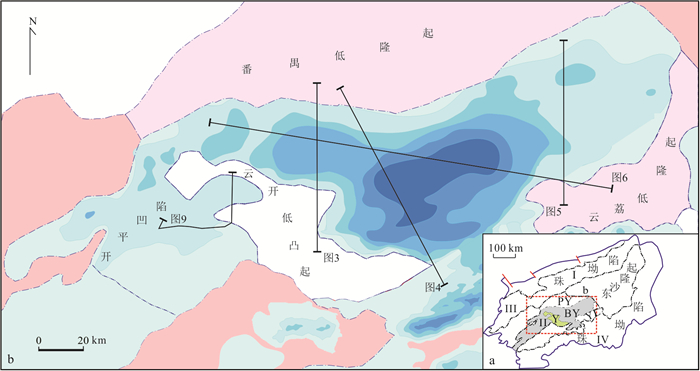
Figures(9)

 DownLoad: