




Reservoir Landslide Displacement Prediction Based on Explainable Machine Learning Model
-
摘要:
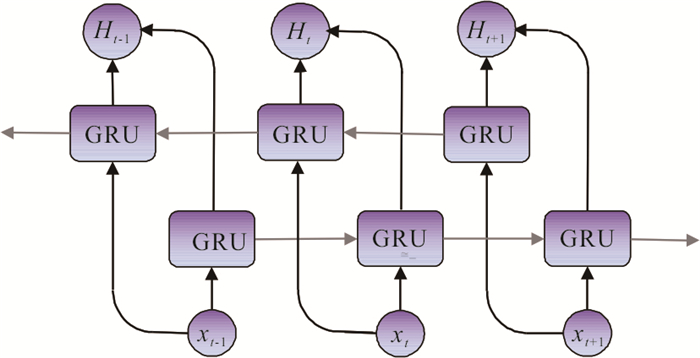
库岸滑坡位移是评估边坡稳定性和实现精准预警的关键指标,但受水库水位周期性涨落的影响,其位移过程常呈现阶梯式变化,给建模预测带来较大挑战.为此,提出一种融合信号分解、深度学习与模型可解释性的滑坡位移预测方法.首先,采用改进的完全集合经验模态分解自适应噪声法(ICEEMDAN)对位移信号进行分解,有效剥离高频周期项与低频趋势项,缓解模态混叠问题并保留多尺度特征;其次,引入双向门控循环单元(BiGRU)模型,分别对各分量进行建模与逐点预测,提升了对滑坡位移的前后依赖关系及突变响应的刻画能力;最后,借助SHAP(SHapley Additive exPlanations)方法解释模型预测结果,揭示了历史与当前水库水位、降雨量及近期位移趋势等关键特征在不同监测点的影响差异.案例研究表明,该方法在RMSE、MAE、MAPE和R2等评价指标上较传统分解方法(EMD、EEMD、CEEMDAN)提升超过20%,BiGRU在YY209监测点实现了R2=0.992、MAE=3.617 mm的预测精度,SHAP分析结果进一步增强了模型的物理可解释性.提出的预测框架兼具精度与透明度,为库岸滑坡风险监测与预警提供了新的技术支撑.
Abstract:Landslide displacement is a key indicator for evaluating slope stability and implementing early warning measures. However, under the influence of cyclic reservoir water level fluctuations, displacement often exhibits step-like patterns, posing significant challenges for accurate modeling and prediction. To address this, it proposes an interpretable machine learning framework for landslide displacement forecasting. The framework first employs an improved Complete Ensemble Empirical Mode Decomposition with Adaptive Noise (ICEEMDAN) to decompose displacement signals into high-frequency cycles and low-frequency trends, effectively mitigating mode mixing while preserving multi-scale features. Then, a Bidirectional Gated Recurrent Unit (BiGRU) model is used to predict each component, leveraging bidirectional context and a lightweight gating mechanism to capture both long-term dependencies and abrupt changes triggered by rainfall. Finally, SHapley Additive exPlanations (SHAP) are applied to interpret the model outputs, identifying key drivers such as historical and current reservoir levels, cumulative rainfall, and recent displacement trends, with site-specific differences across monitoring points. Case studies demonstrate that ICEEMDAN improves RMSE, MAE, MAPE, and R2 by over 20% compared to traditional decomposition methods (EMD, EEMD, CEEMDAN). The BiGRU model achieves high prediction accuracy (e.g., R2 = 0.992 and MAE = 3.617 mm at YY209), while SHAP enhances the transparency and physical interpretability of the predictions. Overall, the proposed framework combines high accuracy with interpretability, offering a promising approach for reservoir landslide early warning and risk management.
-
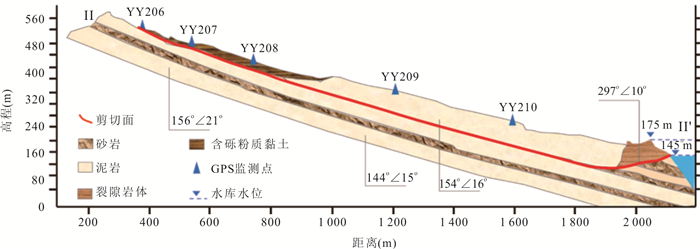
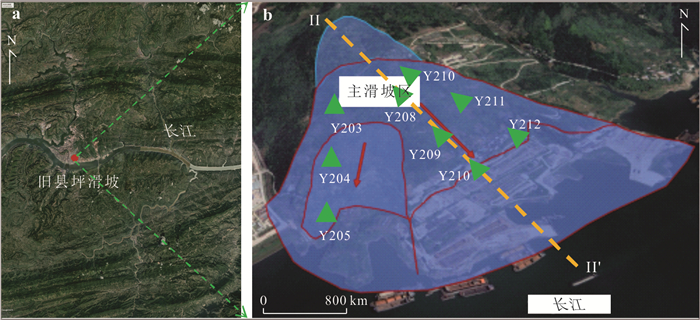
图 4 滑坡的地质剖面(Meng et al., 2025)
Fig. 4. Geologic profile of the Jiuxianping landslide
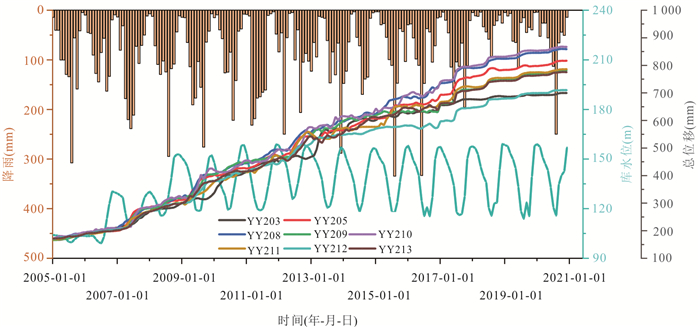
图 5 2005年1月至2021年12月旧县坪滑坡监测点的月降雨量、水库水位和位移
Fig. 5. Monthly rainfall, reservoir levels, and displacements on Jiuxianping landslide monitoring site at 2005 January to 2021 December
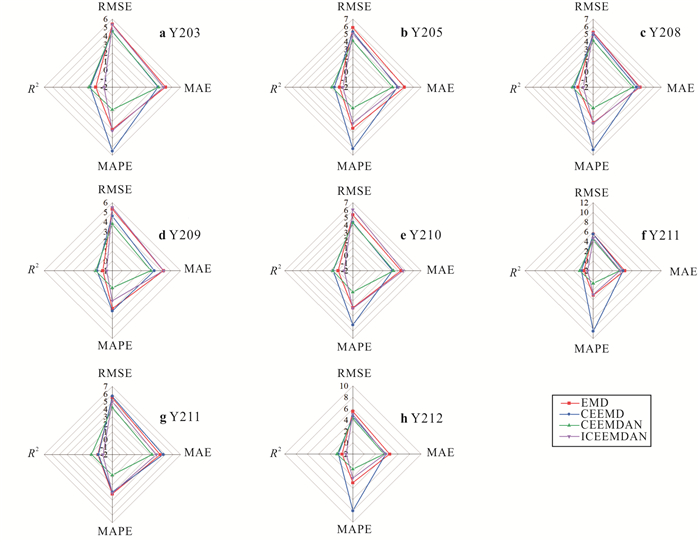
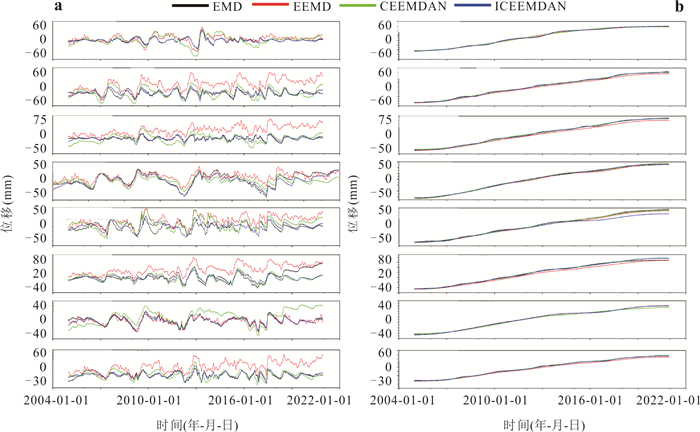
图 6 基于EMD、EEMD、CEEMDAN和ICEEMDAN对周期项的预测
Fig. 6. Prediction of periodic terms based on EMD, EEMD, CEEMDAN and ICEEMDAN
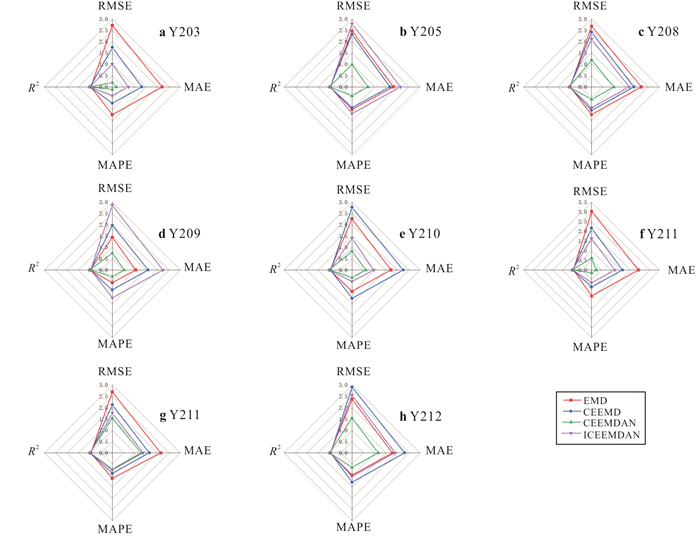
图 7 基于EMD、EEMD、CEEMDAN和ICEEMDAN对趋势项的预测
Fig. 7. Prediction of trend terms based on EMD, EEMD, CEEMDAN and ICEEMDAN
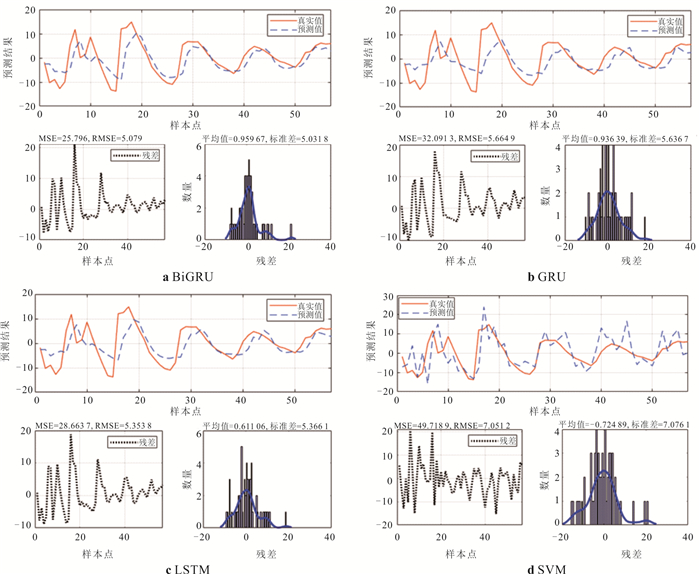
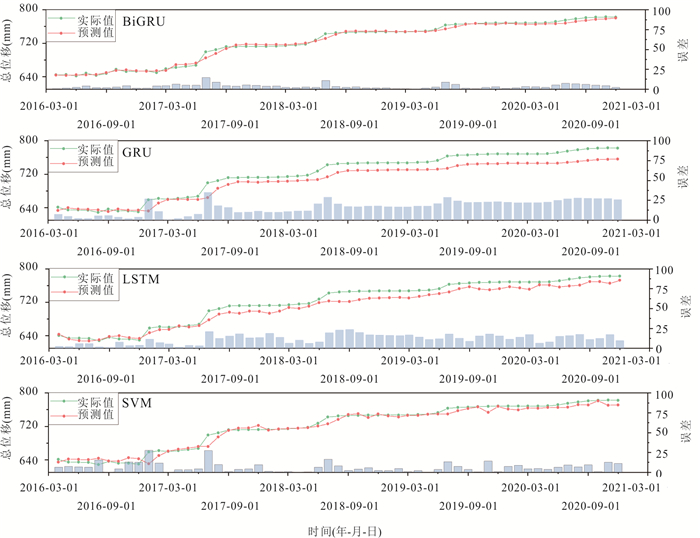
图 8 基于BiGRU,GRU,LSTM,和SVM对YY208周期项预测
Fig. 8. Prediction of YY208 periodic terms based on BiGRU, GRU, LSTM, and SVM
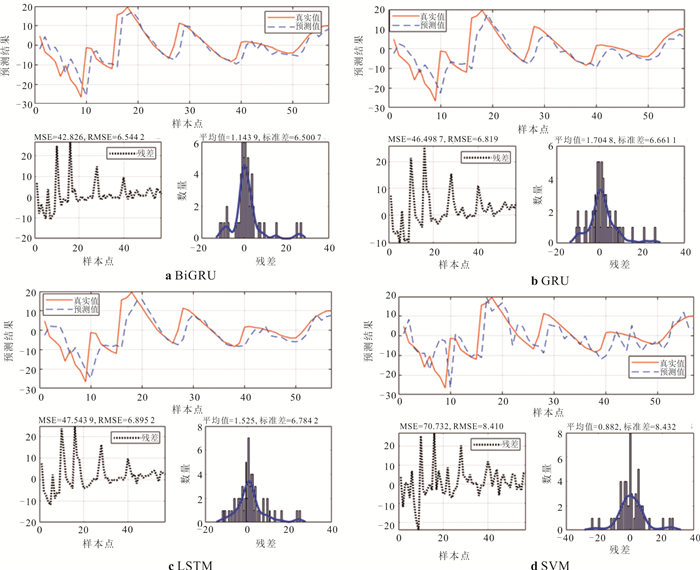
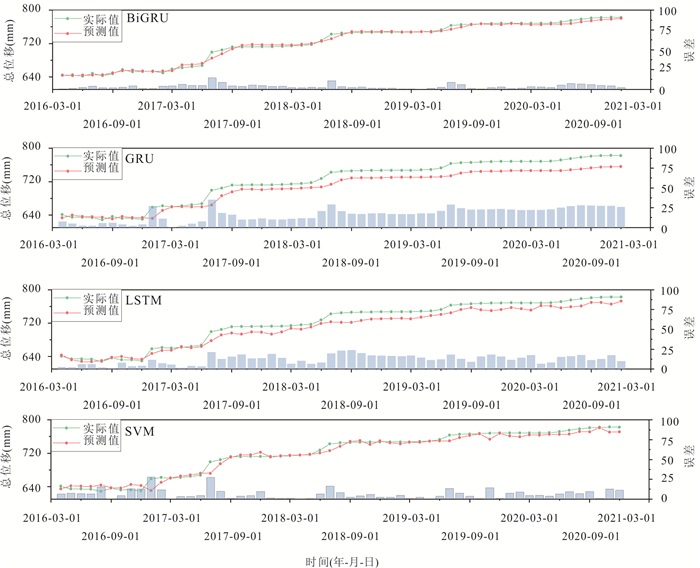
图 9 基于BiGRU,GRU,LSTM,和SVM对YY209周期项预测结果
Fig. 9. Prediction of YY209 periodic terms based on BiGRU, GRU, LSTM, and SVM
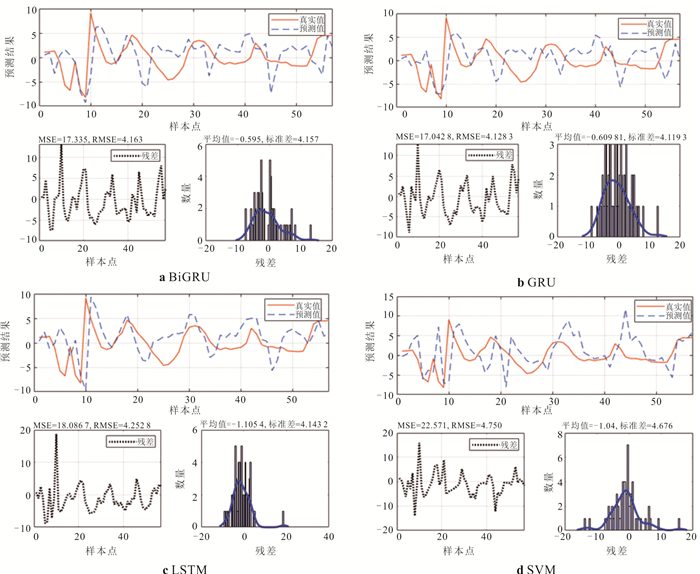
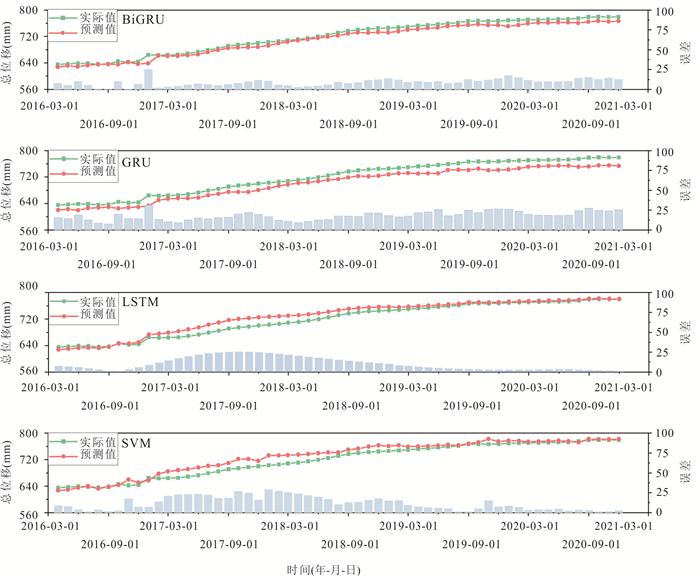
图 10 基于BiGRU,GRU,LSTM,和SVM对YY210周期项预测
Fig. 10. Prediction of YY210 periodic terms based on BiGRU, GRU, LSTM, and SVM
表 1 库岸滑坡位移预测的输入变量
Table 1. Input variables for predicting reservoir landslide displacement
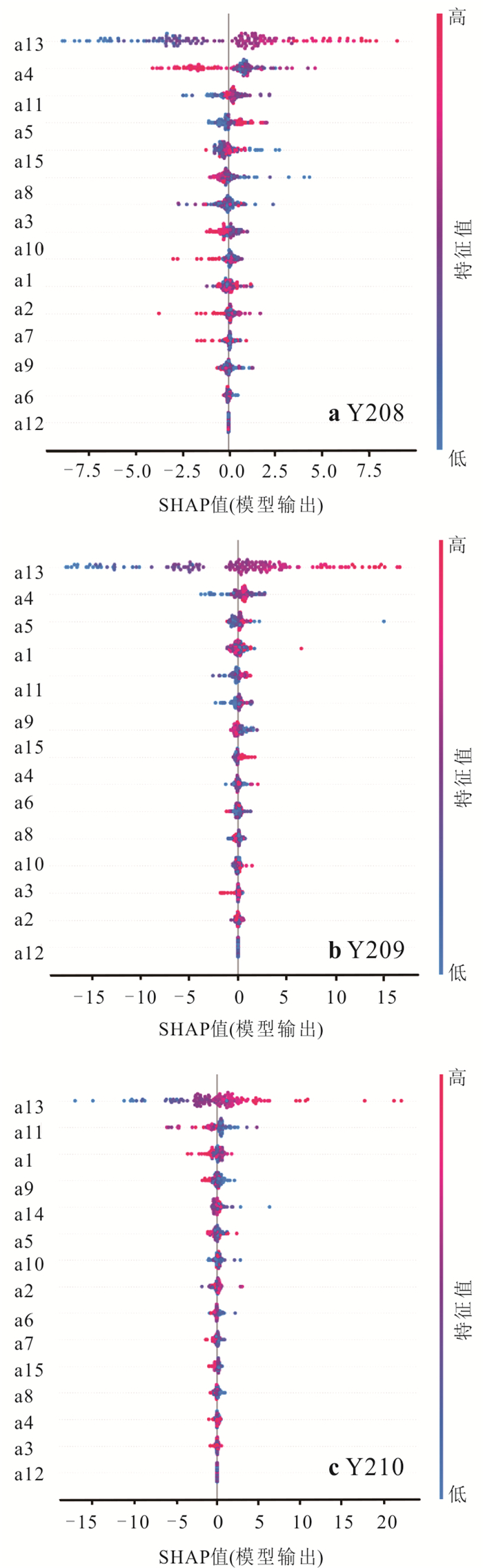
因子 编号 候选变量 库水位 a1 当月水库平均水位 a2 上月水库平均水位 a3 前2个月水库平均水位 a4 前3个月水库平均水位 库水位变化 a5 当月水库水位变化 a6 上月水库水位变化 a7 前2个月水库水位变化 降雨 a8 本月降雨量 a9 上月降雨量 a10 过去2个月的降雨量 a11 过去3个月的降雨量 a12 当月及上月累计降雨量 演化状态 a13 与上个月相比的周期位移 a14 前2个月的周期位移 a15 前3个月的期间位移  下载: 导出CSV
表 2 预测性能的评估指标
Table 2. Evaluation metrics for predictive performance
Method YY208 YY209 YY210 R2 MAE RMSE MAPE R2 MAE RMSE MAPE R2 MAE RMSE MAPE BiGRU 0.988 6.954 7.631 0.008 0.992 3.617 4.418 0.005 0.976 10.67 10.77 0.014 GRU 0.981 9.553 12.30 0.011 0.983 16.54 15.503 0.022 0.975 16.17 17.90 0.024 LSTM 0.979 18.59 14.89 0.022 0.987 11.92 10.843 0.016 0.964 10.39 13.51 0.014 SVM 0.975 17.56 14.93 0.021 0.975 6.487 9.126 0.009 0.959 11.67 13.94 0.021
下载: 导出CSV
-
Al-Najjar, H. A. H., Pradhan, B., Beydoun, G., et al., 2023. A Novel Method Using Explainable Artificial Intelligence (XAI)-Based Shapley Additive Explanations for Spatial Landslide Prediction Using Time-Series SAR Dataset. Gondwana Research, 123: 107-124. https://doi.org/10.1016/j.gr.2022.08.004 Chen, C., Fan, L., 2023. An Attribution Deep Learning Interpretation Model for Landslide Susceptibility Mapping in the Three Gorges Reservoir Area. IEEE Transactions on Geoscience and Remote Sensing, 61: 3000515. https://doi.org/10.1109/TGRS.2023.3323668 Chen, H. Y., Zou, J. H., Wang, X. H., et al., 2023. Inducing Factors and Deformation Mechanism of the Zhangjiacitang Landslide in the Three Gorges Reservoir Area. Scientific Reports, 13: 12926-12940. https://doi.org/10.1038/s41598-023-40186-6 Chen, M. X., Tao, P. J., Zhou, C. B., et al., 2024. Model Modification of Verhulst Inverse-Function Forecasting Model and Probabilistic Forecast for Landslide Failure Time. Earth Science, 49(5): 1692-1705 (in Chinese with English abstract). Deng, L. Z., Yuan, H. Y., Zhang, M. Z., et al., 2023. Research Progress on Landslide Deformation Monitoring and Early Warning Technology. Journal of Tsinghua University (Science and Technology), 63(6): 849-864 (in Chinese with English abstract). Feng, Y., Zeng, H. E., Deng, H. F., et al., 2025. A Step-Type Landslide Displacement Prediction Model Based on Creep Trend Influence and Feature Optimization Algorithm. Chinese Journal of Rock Mechanics and Engineering, 44(3): 705-720 (in Chinese with English abstract). doi: 10.3724/1000-6915.jrme.2024.0554 Gao, D. X., Li, K., Cai, Y. C., et al., 2024. Landslide Displacement Prediction Based on Time Series and PSO-BP Model in Three Georges Reservoir, China. Journal of Earth Science, 35(3): 1079-1082. https://doi.org/10.1007/s12583-021-1575-z Ge, Q., Li, J., Lacasse, S., et al., 2024. Data-Augmented Landslide Displacement Prediction Using Generative Adversarial Network. Journal of Rock Mechanics and Geotechnical Engineering, 16(10): 4017-4033. https://doi.org/10.1016/j.jrmge.2024.01.003 Gong, W. P., Zhang, S. Y., Juang, C. H., et al., 2024. Displacement Prediction of Landslides at Slope-Scale: Review of Physics-Based and Data-Driven Approaches. Earth-Science Reviews, 258: 104948-104976. https://doi.org/10.1016/j.earscirev.2024.104948 Guo, Z. Z., Yang, Y. F., He, J., et al., 2024. Landslide Displacement Prediction Based on a Deep Learning Model Considering the Attention Mechanism. Earth Science, 49(5): 1665-1678 (in Chinese with English abstract). He, X. R., Yin, Y. P., Zhao, L. M., et al., 2024. Disintegration and Fragmentation Effect of High Position Rock Landslide Debris Flow Based on Large Scale Physical Model Test. Earth Science, 49(7): 2650-2661 (in Chinese with English abstract). Jiang, S. H., Xiong, W., Zhu, G. Y., et al., 2024. Probabilitic Analysis of Reservoir Landslides Considering the Spatial Variation of Seepage Parameters under the Conditions of Rainstorm and Sudden Drop of Water Level. Earth Science, 49(5): 1679-1691 (in Chinese with English abstract). Jiang, Z., Zhao, C. Y., Liu, X. J., et al., 2025. The Regional Differentiation on the Spatial Distribution and Influencing Factors of Potential Landslides across the Entire Loess Plateau, China, Based on InSAR and Subregion XGBoost-SHAP Model. IEEE Journal of Selected Topics in Applied Earth Observations and Remote Sensing, 18: 2024-2041. https://doi.org/10.1109/JSTARS.2024.3504713 Kafle, L., Xu, W. J., Zeng, S. Y., et al., 2022. A Numerical Investigation of Slope Stability Influenced by the Combined Effects of Reservoir Water Level Fluctuations and Precipitation: A Case Study of the Bianjiazhai Landslide in China. Engineering Geology, 297: 106508-106521. https://doi.org/10.1016/j.enggeo.2021.106508 Li, B. Y., Wang, G. L., Chen, L. C., et al., 2024a. Analysis of Landslide Deformation Mechanisms and Coupling Effects under Rainfall and Reservoir Water Level Effects. Engineering Geology, 343: 107803. https://doi.org/10.1016/j.enggeo.2024.107803 Li, T. Z., Zhang, L. M., Gong, W. P., et al., 2024b. Initiation Mechanism of Landslides in Cold Regions: Role of Freeze-Thaw Cycles. International Journal of Rock Mechanics and Mining Sciences, 183: 105906-105916. https://doi.org/10.1016/j.ijrmms.2024.105906 Li, Y. G., Fu, B. J., Yin, Y. P., et al., 2024c. Review on the Artificial Intelligence-Based Methods in Landslide Detection and Susceptibility Assessment: Current Progress and Future Directions. Intelligent Geoengineering, 1(1): 1-18. https://doi.org/10.1016/j.ige.2024.10.003 Li, D. Y., Nian, T. K., Wu, H., et al., 2023. Coupled DEM-CFD Method for Landslide-River Blockage-Impulse Wave Disaster Chain Simulation and Its Application. Advanced Engineering Sciences, 55(1): 141-149 (in Chinese with English abstract). Li, G. E., Hu, B., Li, H., et al., 2021. Early Identifying and Monitoring Landslides in Guizhou Province with InSAR and Optical Remote Sensing. Journal of Sensors, 2021: 6616745. https://doi.org/10.1155/2021/6616745 Liu, G. Y., Meng, H. Y., Song, G. Y., et al., 2024. Numerical Simulation of Wedge Failure of Rock Slopes Using Three-Dimensional Discontinuous Deformation Analysis. Environmental Earth Sciences, 83(10): 308-309. https://doi.org/10.1007/s12665-024-11619-w Liu, Y. L., Chen, J. X., Gao, C. X., et al., 2022. Energy Conversion of the High-Speed Landslide Movement Process Based on a Sliding Surface Partition Mechanical Model. Bulletin of Geological Science and Technology, 41(2): 139-146 (in Chinese with English abstract). Liu, Y., Li, X. R., Zhan, W. W., et al., 2023. State Affine Transfer Learning Method for Hydrodynamic Pressure-Driven Landslide. Earth Science, 48(5): 1793-1806 (in Chinese with English abstract). Ma, J. W., Xia, D., Wang, Y. K., et al., 2022. A Comprehensive Comparison among Metaheuristics (MHs) for Geohazard Modeling Using Machine Learning: Insights from a Case Study of Landslide Displacement Prediction. Engineering Applications of Artificial Intelligence, 114: 105150-105169. https://doi.org/10.1016/j.engappai.2022.105150 Ma, X. F., Xu, Y. S., Yang, J., et al., 2023. A Study of Prediction of Ground Settlement of Shield Tunnel Based on EEMD-BO-GRU Algorithm. Journal of Physics: Conference Series, 2450(1): 012080-12090. https://doi.org/10.1088/1742-6596/2450/1/012080 Ma, Z. J., Mei, G., 2021. Deep Learning for Geological Hazards Analysis: Data, Models, Applications, and Opportunities. Earth-Science Reviews, 223: 103858. https://doi.org/10.1016/j.earscirev.2021.103858 Meng, S. Q., Shi, Z. M., Li, G., et al., 2024a. A Novel Deep Learning Framework for Landslide Susceptibility Assessment Using Improved Deep Belief Networks with the Intelligent Optimization Algorithm. Computers and Geotechnics, 167: 106106-106122. https://doi.org/10.1016/j.compgeo.2024.106106 Meng, S. Q., Shi, Z. M., Peng, M., et al., 2024b. Landslide Displacement Prediction with Step-Like Curve Based on Convolutional Neural Network Coupled with Bi-Directional Gated Recurrent Unit Optimized by Attention Mechanism. Engineering Applications of Artificial Intelligence, 133: 108078-108099. https://doi.org/10.1016/j.engappai.2024.108078 Meng, S. Q., Shi, Z. M., Li, G., et al., 2025. Machine Learning-Based Data Mining of Reservoir Landslide Triggering Mechanisms and Failure Time Prediction for Displacement Sudden State. International Journal of Rock Mechanics and Mining Sciences, 194: 106234-106251. https://doi.org/10.1016/j.ijrmms.2025.106234 Song, K. L., Yang, H. Q., Liang, D., et al., 2024. Step-Like Displacement Prediction and Failure Mechanism Analysis of Slow-Moving Reservoir Landslide. Journal of Hydrology, 628: 130588. https://doi.org/10.1016/j.jhydrol.2023.130588 Tehrani, F. S., Calvello, M., Liu, Z. Q., et al., 2022. Machine Learning and Landslide Studies: Recent Advances and Applications. Natural Hazards, 114(2): 1197-1245. https://doi.org/10.1007/s11069-022-05423-7 Wang, L., Wu, C. Z., Yang, Z. Y., et al., 2023. Deep Learning Methods for Time-Dependent Reliability Analysis of Reservoir Slopes in Spatially Variable Soils. Computers and Geotechnics, 159: 105413-105424. https://doi.org/10.1016/j.compgeo.2023.105413 Xiang, X. K., Xiao, J. F., Wen, H. J., et al., 2024. Prediction of Landslide Step-Like Displacement Using Factor Preprocessing-Based Hybrid Optimized SVR Model in the Three Gorges Reservoir, China. Gondwana Research, 126: 289-304. https://doi.org/10.1016/j.gr.2023.09.016 Xiao, S. R., Wei, R. Q., Li, Y., et al., 2023. Review on Vaiont Landslide in Italy. Yangtze River, 54(4): 130-140 (in Chinese with English abstract). Xing, B. Y., Zhang, W. Y., Zhang, G. C., et al., 2023. Prediction of Step-Type Landslides Based on Deformation Rate Decomposition—A Case Study of Gapa Landslide. Chinese Journal of Rock Mechanics and Engineering, 42(3): 685-697 (in Chinese with English abstract). Xu, Q., Zhu, X., Li, W. L., et al., 2022. Technical Progress of Space-Air-Ground Collaborative Monitoring of Landslide. Acta Geodaetica et Cartographica Sinica, 51(7): 1416-1436 (in Chinese with English abstract). Zhang, J. R., Tang, H. M., Li, C. D., et al., 2024. Deformation Stage Division and Early Warning of Landslides Based on the Statistical Characteristics of Landslide Kinematic Features. Landslides, 21(4): 717-735. https://doi.org/10.1007/s10346-023-02192-7 Zhang, T. L., Wu, T. Y., Wang, L. Q., et al., 2023. Nonlinear Prediction of Landslide Stability Based on Machine Learning. Earth Science, 48(5): 1989-1999 (in Chinese with English abstract). Zhou, H. F., Ye, F., Fu, W. X., et al., 2024. Dynamic Effect of Landslides Triggered by Earthquake: A Case Study in Moxi Town of Luding County, China. Journal of Earth Science, 35(1): 221-234. https://doi.org/10.1007/s12583-022-1806-y 陈铭熙, 陶培捷, 周创兵, 等, 2024. Verhulst反函数预测模型的改进及滑坡时间概率预测. 地球科学, 49(5): 1692-1705. doi: 10.3799/dqkx.2023.003 邓李政, 袁宏永, 张鸣之, 等, 2023. 滑坡变形监测预警技术研究进展. 清华大学学报(自然科学版), 63(6): 849-864. 冯谕, 曾怀恩, 邓华锋, 等, 2025. 基于蠕滑趋势影响和特征优化算法的阶跃型滑坡位移预测模型. 岩石力学与工程学报, 44(3): 705-720. 郭子正, 杨玉飞, 何俊, 等, 2024. 考虑注意力机制的新型深度学习模型预测滑坡位移. 地球科学, 49(5): 1665-1678. doi: 10.3799/dqkx.2022.306 贺旭荣, 殷跃平, 赵立明, 等, 2024. 基于大型物理模型试验的高位岩质滑坡碎屑流解体破碎效应. 地球科学, 49(7): 2650-2661. doi: 10.3799/dqkx.2023.021 蒋水华, 熊威, 朱光源, 等, 2024. 暴雨及水位骤降条件下渗流参数空间变异的水库滑坡概率分析. 地球科学, 49(5): 1679-1691. doi: 10.3799/dqkx.2022.361 李东阳, 年廷凯, 吴昊, 等, 2023. 滑坡-堵江-涌浪灾害链模拟的DEM-CFD耦合分析方法及其应用. 工程科学与技术, 55(1): 141-149. 刘聪, 陈永吉, 张条, 等, 2025. 基于AI技术的滑坡易发性制图研究进展. 地球科学, 50(6): 2270-2283. doi: 10.3799/dqkx.2024.114 刘艺梁, 陈健翔, 高晨曦, 等, 2022. 基于滑面分区段力学模型的高速滑坡运动过程能量转化研究. 地质科技通报, 41(2): 139-146. 刘勇, 李星瑞, 詹伟文, 等, 2023. 动水驱动型滑坡的状态仿射迁移学习方法. 地球科学, 48(5): 1793-1806. doi: 10.3799/dqkx.2022.439 吴润泽, 李浩, 梅红波, 等, 2025. 基于知识图谱检索增强生成的滑坡监测预警系统. 地球科学, 50(10): 4125-4136. doi: 10.3799/dqkx.2025.127 肖诗荣, 魏瑞琦, 李莹, 等, 2023. 意大利瓦依昂滑坡研究综述. 人民长江, 54(4): 130-140. 邢保印, 张炜怡, 章广成, 等, 2023. 基于变形速率分解的阶跃型滑坡预测: 以呷爬滑坡为例. 岩石力学与工程学报, 42(3): 685-697. 许强, 朱星, 李为乐, 等, 2022. "天-空-地"协同滑坡监测技术进展. 测绘学报, 51(7): 1416-1436. 张泰丽, 吴廷尧, 王鲁琦, 等, 2023. 基于Box-Jenkins随机模型的滑坡稳定性预测模型. 地球科学, 48(5): 1989-1999. doi: 10.3799/dqkx.2023.036 -

 点击查看大图
计量
- 文章访问数: 250
- HTML全文浏览量: 20
- PDF下载量: 48
- 被引次数: 0
